 Valeria Valkova
 Synonyms
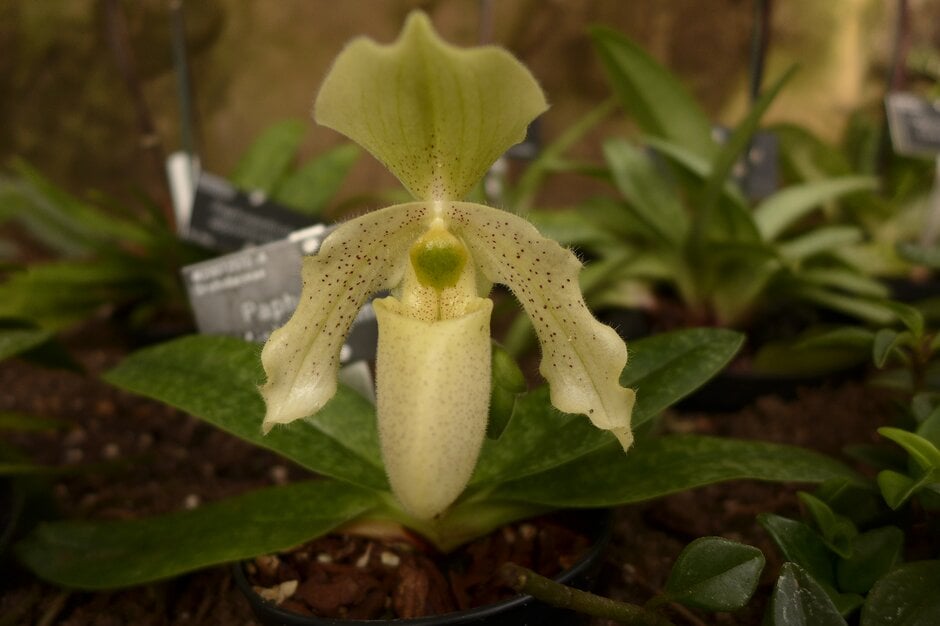
Paphiopedilum 'Misha Kajiima'
Conservatory Greenhouse Houseplants
Position
Partial shade
Max Height
0.1-0.5 metres
Max Spread
0.1-0.5 metres
Valeria Valkova Paphiopedilum 'Misha Kajiima'
0.1-0.5 metres
0.1-0.5 metres
Grow in a terrestrial, free-draining, bark-based orchid mix. Provide enough bright filtered light, but keep away from direct sunlight or a heating source. Ideal temperatures are around 13 °C minimum at night and up to maximum 24 °C during the day. Water with soft water (ideally rainwater) when the pot feels light when lifted. Ensure that all water drains away, preventing the plant from sitting wet. As the plant lacks pseudobulbs to store water, it shouldn't be left dry for long time. Apply orchid fertiliser with every third watering. Avoid heavy misting or overhead watering. As with many orchids, they grow best when well-established and slightly pot-bound. Re-potting should be only done if the plant overgrows its container or before the potting mix starts to deteriorate - approximately once in 2-3 years. See Paphiopedilum cultivation for more detailed advice.
Propagation by seed is only possible in a controlled laboratory environment. Well-estastablished plants can be propagated by division. Ensure each division has enough roots and leaf rosettes to support new growth.
No pruning required other than removing spent flower stems.
May be susceptible to scale insect, aphids and mealybugs. Thrips can cause damage on flowers and developing flower buds
Generally disease-free. Poor air movement may cause bacterial or fungal rots. Good hygiene practice and sterilising cutting tools prevent the spread of virus diseases