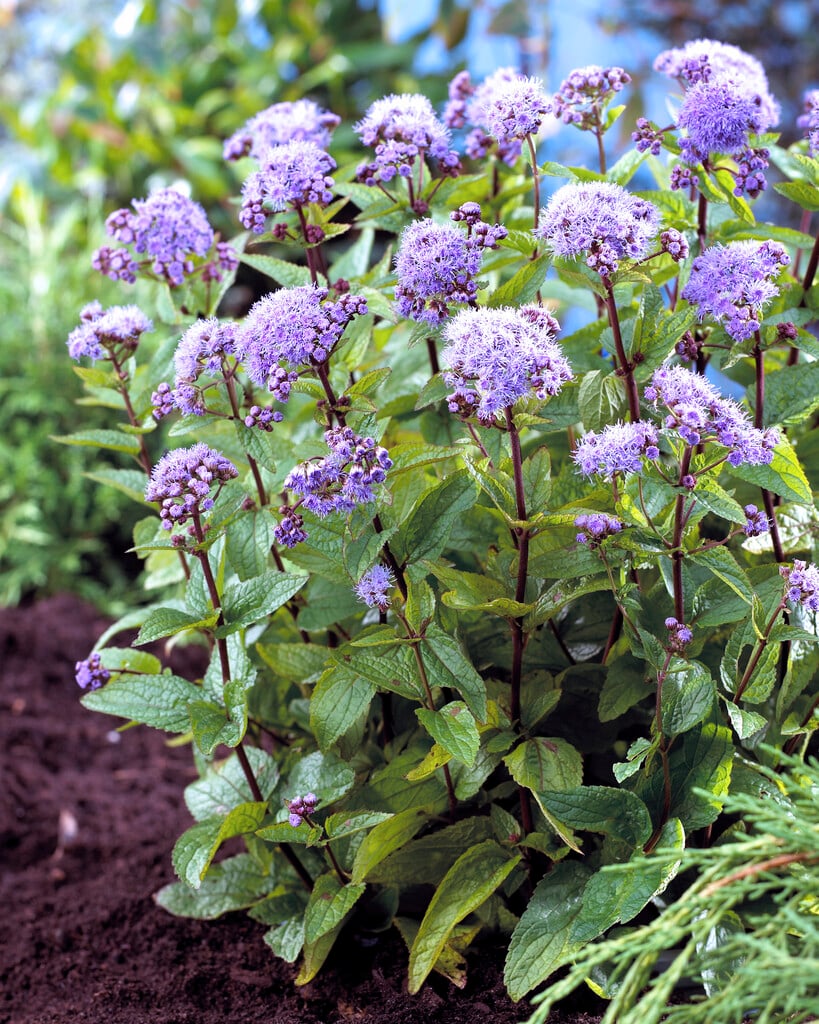
Conoclinium coelestinum 'Cori'

Synonyms

Eupatorium coelestinum 'Cori'

Herbaceous Perennial

A compact, vigorous, rhizomatous deciduous herbaceous perennial with oval-shaped, dark green toothed foliage and showy, fluffy light blue-purple flowers appearing in the summer through to autumn. Prefers a moist to boggy location alongside ponds and streams. May become a nuisance if not kept in check

Position

Full sun, Partial shade

Soil Types

Chalk, Clay

Max Height

0.5-1 metres

Max Spread

0.5-1 metres

Size

Time to Maturity
1–2 years
Max Spread
0.5-1 metres
Max Height
0.5-1 metres

Growing Conditions

Chalk Clay
Moisture
Moist but well–drained or Poorly–drained
pH
Acid or Alkaline or Neutral

Position

Full sun Partial shade
Aspect
East–facing or North–facing or South–facing or West–facing
Exposure
Sheltered
Hardiness
H4

Colour & Scent

Season Stem Flower Foliage Fruit
Spring
Summer
Autumn
Winter

Botanical Details

Family
Asteraceae
Native to GB/Ireland
No
Foliage
Deciduous
Habit
Bushy
Genus
A genus of four species of herbaceous perennial flowering plants loved by pollinators, native to North America, with green foliage and flat clusters of fuzzy-looking flowers in hues of blue, lavender, or pinkish-white
Name Status
Accepted

How to Grow

Cultivation

Grow in very moist to wet soil in sun or partial shade. Plants may require support. Plants have the potential to become a nuisance if not kept in check, but drier soils will slow growth

Propagation

Propagate by stem cuttings

Suggested planting locations and garden types

  • Cottage and informal garden
  • Coastal
  • Banks and slopes
  • Flower borders and beds

Pruning

No pruning required

Pests

May be susceptible to leaf miner and aphids

Diseases

May be susceptible to powdery mildews