Vernonia lettermannii
narrowleaf ironweed
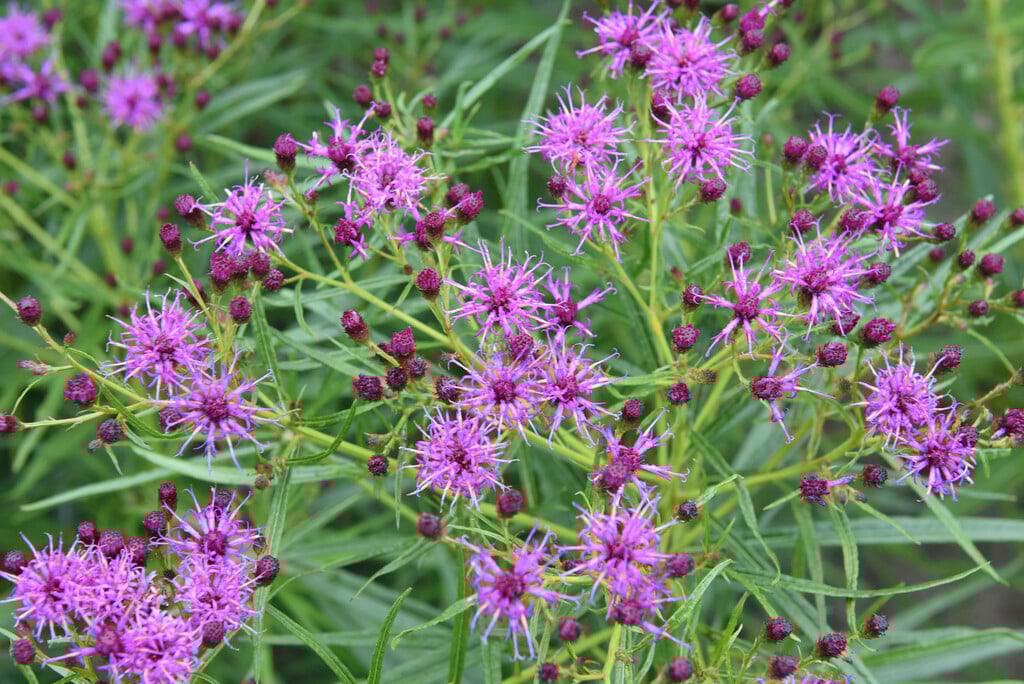
A clump-forming perennial with upright, smooth, leafy stems to 80cm high. Leaves are narrow and threadlike, to 9cm long but only 1-3mm wide. In late summer, flattened clusters of 10-12 small violet flowers are produced on branched stems above the foliage. Flowers are followed by grey-brown seedheads
Buy this plant
Size
Ultimate height
0.5–1 metresTime to ultimate height
1–2 yearsUltimate spread
0.5–1 metresGrowing conditions
Moisture
Moist but well–drained, Well–drainedpH
Acid, Alkaline, NeutralColour & scent
| Stem | Flower | Foliage | Fruit | |
| Spring | Green | |||
|---|---|---|---|---|
| Summer | Purple | Green | ||
| Autumn | Green | |||
| Winter |
Position
- Full sun
- Partial shade
Aspect
East–facing or South–facing or West–facing
Exposure
Exposed or Sheltered Hardiness
H7Botanical details
- Family
- Asteraceae
- Native to GB / Ireland
- No
- Foliage
- Deciduous
- Habit
- Clump forming
- Genus
Vernonia are annuals, perennials, climbers, sub-shrubs, shrubs and trees, though only the perennials are in cultivation. They have upright stems, simple, stalkless leaves and flat branched heads of tubular purple or reddish pink, occasionally white, flowers
- Name status
Correct
- Plant range
- USA (Arkansas, Oklahoma)
How to grow
Cultivation
Grow in a light, moderately fertile, moist soil preferably in full sun but will tolerate partial shade
Propagation
Propagate by seed or by division; will self seed freely if not deadheaded
Suggested planting locations and garden types
- Cottage and informal garden
- Wildflower meadow
- Banks and slopes
- Flower borders and beds
Pruning
Deadhead to prolong flowering and, if necessary, to prevent self-seeding
Pests
Generally pest-free
Diseases
Generally disease-free
Get involved
The Royal Horticultural Society is the UK’s leading gardening charity. We aim to enrich everyone’s life through plants, and make the UK a greener and more beautiful place.