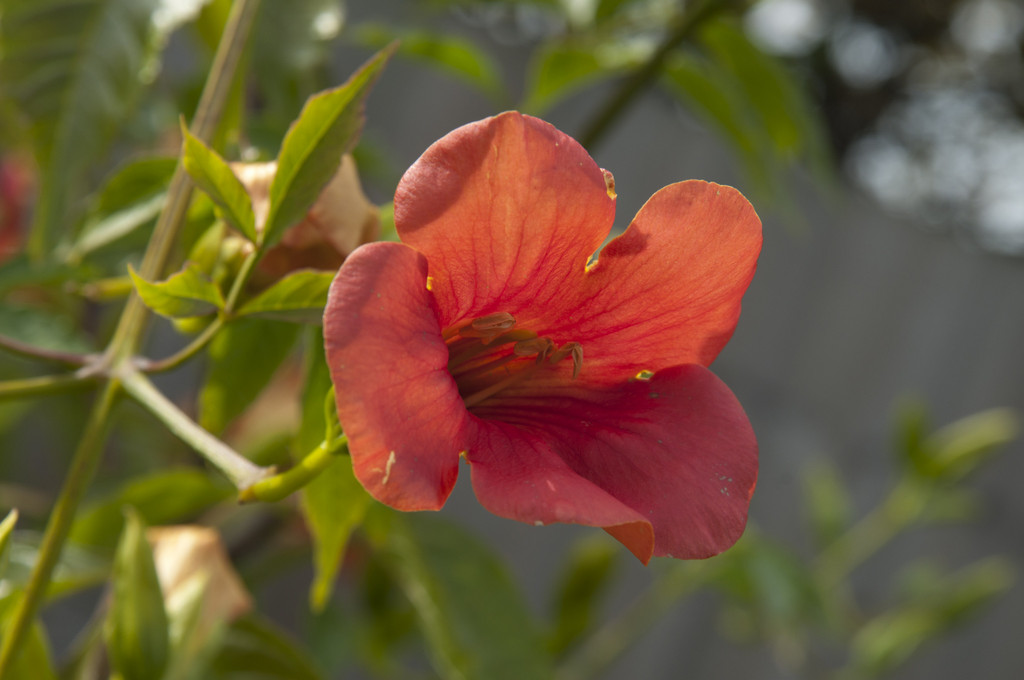
Campsis grandiflora

RHS Plant Profile
Chinese trumpet creeper
Chinese trumpet creeper RHS

Other common names

Chinese trumpet vine

Synonyms

Bignonia grandiflora
Campsis chinensis
Bignonia chinensis

Climber Wall Shrub

A vigorous climber with mid to dark green leaves comprising of seven to nine leaflets. From late summer to autumn produces terminal clusters of dark orange to red, trumpet-shaped flowers

Position

Full sun

Soil Types

Chalk, Clay, Loam, Sand

Max Height

8-12 metres

Max Spread

2.5-4 metres

Size

Time to Maturity
5–10 years
Max Spread
2.5-4 metres
Max Height
8-12 metres

Growing Conditions

Chalk Clay Loam Sand
Moisture
Moist but well–drained
pH
Acid or Alkaline or Neutral

Position

Full sun
Aspect
South–facing or West–facing
Exposure
Sheltered
Hardiness
H4
Drought Resistance
Yes

Colour & Scent

Season Stem Flower Foliage Fruit
Spring
Summer
Autumn
Winter

Botanical Details

Family
Bignoniaceae
Native to GB/Ireland
No
Foliage
Deciduous
Habit
Climbing
Genus
Campsis are fast-growing deciduous climbers clinging by aerial roots, pinnate leaves and clusters of tubular-funnel-shaped flowers in late summer or early autumn
Name Status
Correct
Plant Range
Japan, China

How to Grow

Cultivation

A climber that despite its exotic-looking flowers is reasonably hardy if grown against a warm, sunny wall. Produces relatively few aerial roots, so likely to need tying in regularly. See campsis cultivation

Propagation

Propagate by seed sown in containers in a cold frame in autumn, or by layering, hardwood cuttings or root cuttings

Suggested planting locations and garden types

  • Mediterranean climate plants
  • Sub-tropical
  • Wall side borders

Pruning

Pruning group 12 in late winter or early spring

Pests

May be susceptible to aphids

Diseases

May be susceptible to honey fungus and powdery mildews