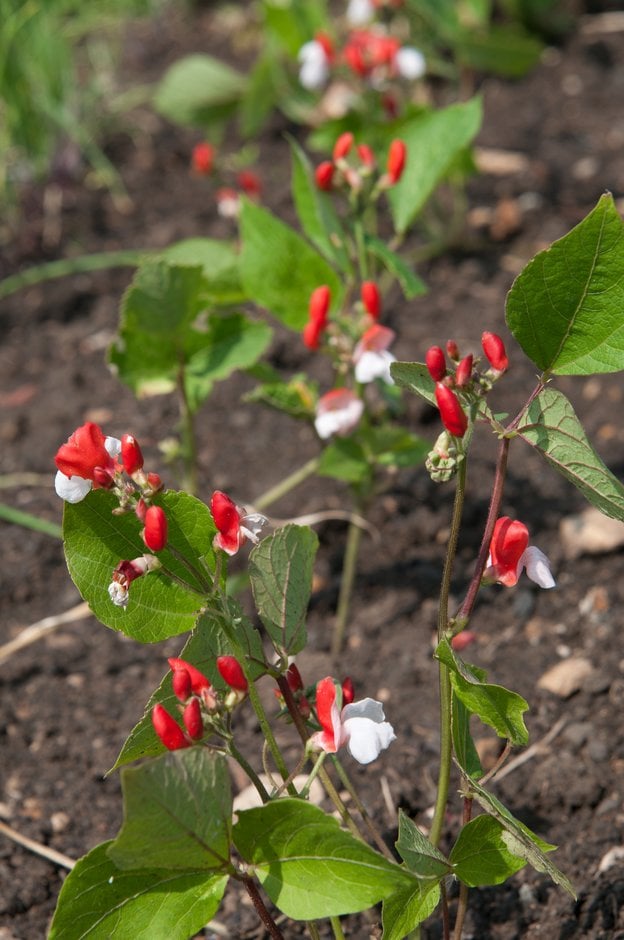
Phaseolus coccineus 'Hestia'

RHS Plant Profile
bean (runner) 'Hestia'
bean (runner) 'Hestia' RHS
Plants for pollinators
Climber Wall Shrub Fruit Edible

'Hestia' is a dwarf runner bean grown as an annual crop. It has a bushy compact habit up to 45cm tall and so is well-suited to growing in containers. Bi-coloured red and white flowers in summer are followed by long, straight, stringless pods

Position

Full sun, Partial shade

Soil Types

Loam, Sand

Max Height

0.1-0.5 metres

Max Spread

0.1-0.5 metres

Size

Time to Maturity
1 year
Max Spread
0.1-0.5 metres
Max Height
0.1-0.5 metres

Growing Conditions

Loam Sand
Moisture
Moist but well–drained or Well–drained
pH
Alkaline or Neutral

Position

Full sun Partial shade
Aspect
West–facing or South–facing
Exposure
Sheltered
Hardiness
H2

Colour & Scent

Season Stem Flower Foliage Fruit
Spring
Summer
Autumn
Winter

Botanical Details

Family
Fabaceae
Native to GB/Ireland
No
Foliage
Deciduous
Habit
Bushy
Potentially harmful
Raw pods/beans harmful if eaten. Wear gloves and other protective equipment when handling. Pets (dogs): Raw pods/beans harmful if eaten - see the HTA guide to potentially harmful plants for further information and useful contact numbers
Genus
Phaseolus are annual or perennial legumes, usually climbing or trailing in form, and with trifoliate leaves. Grown as crop plants for their edible seeds, including runner, French and lima beans, as well as for animal feed, green manures and as ornamentals
Name Status
Accepted

How to Grow

Cultivation

Grow in any moisture retentive soil in full sun. For more information see runner-bean cultivation

Propagation

Propagate by seed

Suggested planting locations and garden types

  • Cottage and informal garden
  • Patio and container plants
  • City and courtyard gardens
  • Wildlife gardens
  • Climber and wall shrubs
  • Wall side borders

Pruning

No pruning required

Pests

May be susceptible to black bean aphids. Young plants also need protection from slugs and snails

Diseases

Generally problem- free but can be susceptible to foot and root rot