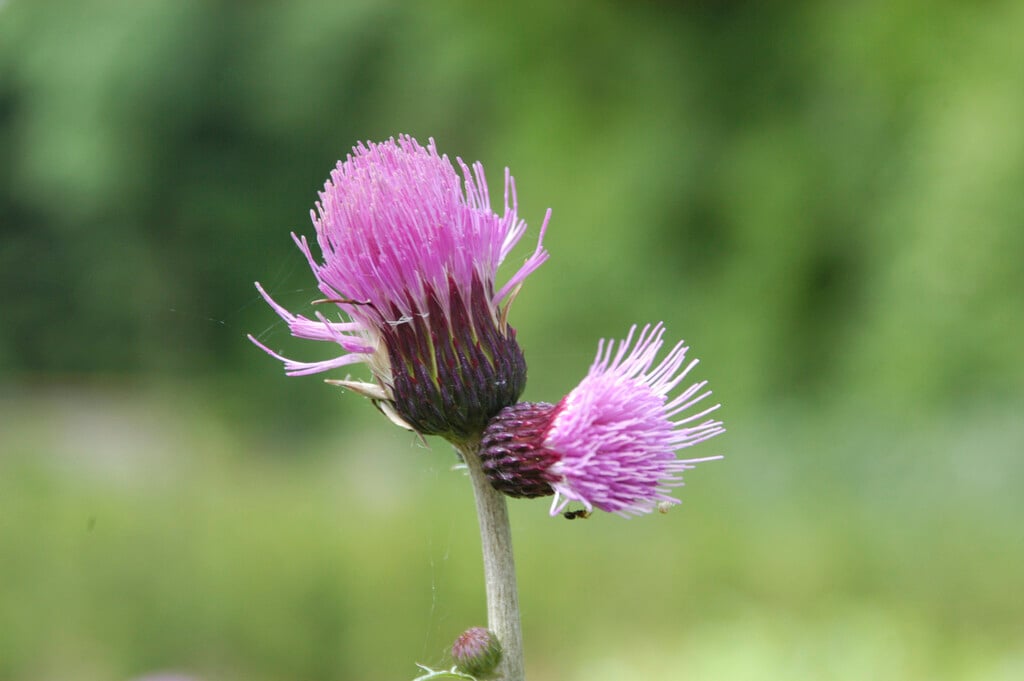
Cirsium rivulare

<em>Cirsium</em> <em>rivulare</em> visionspictures.com
Plants for pollinators
Herbaceous Perennial

A clump-forming perennial, to around 1.2m high, with simple, lobed or pinnately divided, spiny deep green leaves with hairy undersides. In early to mid summer, produces rounded, thistle-like flowers, with tubular reddish-purple petals

Position

Full sun, Partial shade

Soil Types

Chalk, Clay, Loam

Max Height

1-1.5 metres

Max Spread

0.5-1 metres

Size

Time to Maturity
2–5 years
Max Spread
0.5-1 metres
Max Height
1-1.5 metres

Growing Conditions

Chalk Clay Loam
Moisture
Moist but well–drained
pH
Acid or Alkaline or Neutral

Position

Full sun Partial shade
Aspect
East–facing or South–facing or West–facing
Exposure
Exposed or Sheltered
Hardiness
H7

Colour & Scent

Season Stem Flower Foliage Fruit
Spring
Summer
Autumn
Winter

Botanical Details

Family
Asteraceae
Native to GB/Ireland
No
Foliage
Deciduous
Habit
Clump forming
Genus
Cirsium may be biennials or perennials with spiny leaves and typical thistle-type flower-heads
Name Status
Correct
Plant Range
C & SW Europe

How to Grow

Cultivation

Thrives in full sun, particularly in damp, acidic soil but will tolerate a range of soils and positions

Propagation

Propagate by seed, or by division between autumn and spring

Suggested planting locations and garden types

  • Wildflower meadow
  • Wildlife gardens

Pruning

Deadhead if seed is not required

Pests

Generally pest-free

Diseases

May be susceptible to powdery mildews