 RHS
RHS 
Annual Biennial Bedding
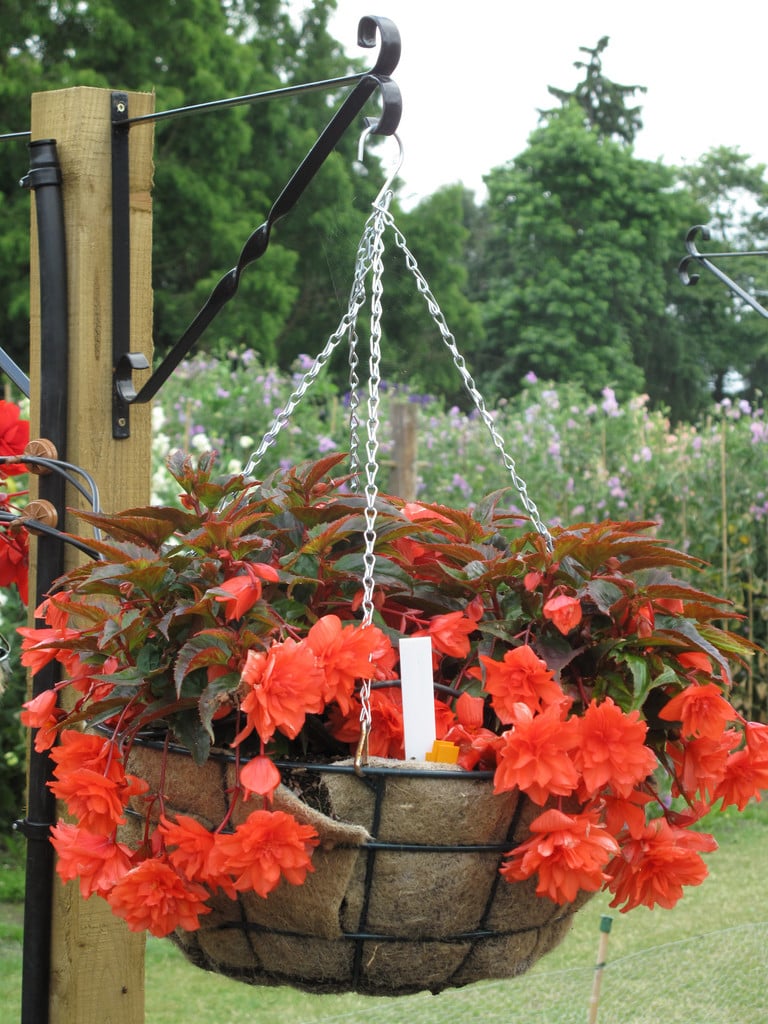
A tender perennial with showy red semi-double flowers and dark red-green foliage; to 30 cm
Position
Partial shade
Soil Types
Loam
Max Height
0.1-0.5 metres
Max Spread
0.1-0.5 metres
RHS A tender perennial with showy red semi-double flowers and dark red-green foliage; to 30 cm
0.1-0.5 metres
0.1-0.5 metres
| Season | Stem | Flower | Foliage | Fruit |
|---|---|---|---|---|
| Spring | ||||
| Summer | ||||
| Autumn | ||||
| Winter |
Under glass requires a light, well-drained, neutral to acid, peat-free compost, in bright light with shade from direct sun. Provide moderate water when in growth and dry off tubers in winter, storing at 5-7°C. See begonias: outdoors for further advice.
Propagate by seed at 21°C (70F) in spring. Root basal or stem-tip softwood cuttings in spring and leaf cuttings in late spring or early summer using a propagating case
Remove old stems and foliage as plant dies back for the winter
May be susceptible to caterpillars, mealy bugs, mites, glasshouse Thrips, vine weevil and aphids
May be susceptible to grey moulds, Powdery mildews, stem rot and rhizome rot