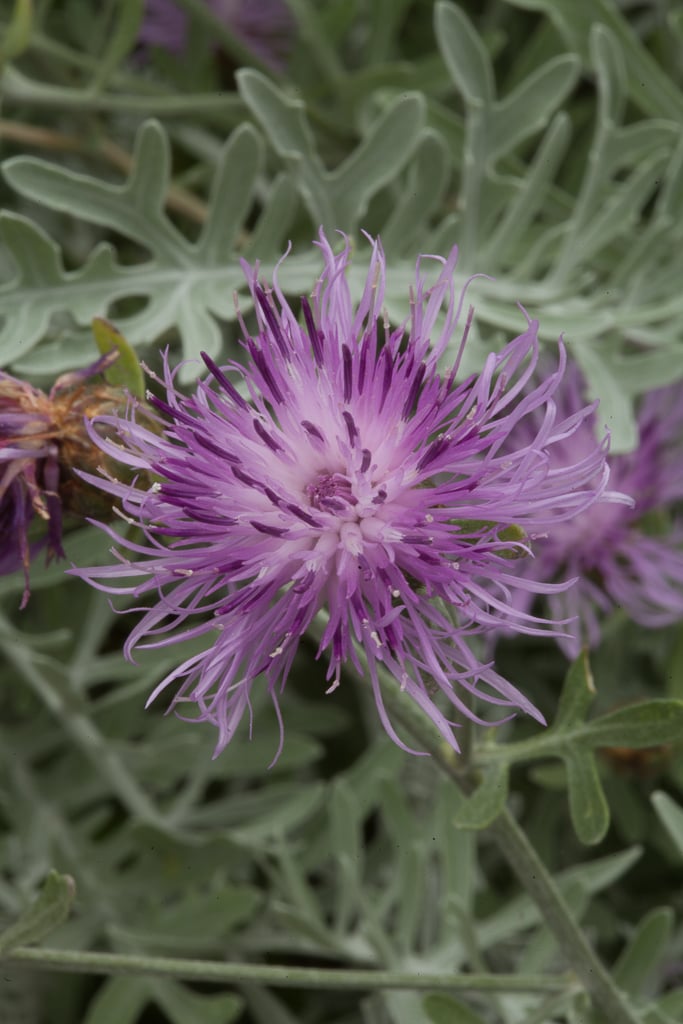
Centaurea 'Silver Feather'

RHS Plant Profile
knapweed 'Silver Feather'
knapweed 'Silver Feather' John Fielding
Plants for pollinators
Herbaceous Perennial

A herbaceous perennial with a dense silvery down on leaves and stems, forming a bushy clump of finely divided leaves 30-40cm high. Flowers from early to late summer, with slender stems high above the foliage bearing buds encased in overlapping bracts, which open to showy, thistle-like, pale lilac-pink flowers

Position

Full sun

Soil Types

Chalk, Loam, Sand

Max Height

0.5-1 metres

Max Spread

0.1-0.5 metres

Size

Time to Maturity
2–5 years
Max Spread
0.1-0.5 metres
Max Height
0.5-1 metres

Growing Conditions

Chalk Loam Sand
Moisture
Well–drained
pH
Acid or Alkaline or Neutral

Position

Full sun
Aspect
South–facing or West–facing
Exposure
Exposed or Sheltered
Hardiness
H3

Colour & Scent

Season Stem Flower Foliage Fruit
Spring
Summer
Autumn
Winter

Botanical Details

Family
Asteraceae
Native to GB/Ireland
No
Foliage
Semi evergreen
Habit
Clump forming
Genus
Centaurea may be annuals, perennials or subshrubs, with simple or pinnately lobed leaves and showy thistle-like flowers-heads, often with enlarged outer florets
Name Status
Unresolved

How to Grow

Cultivation

Grow in almost any well-drained soil in full sun. May be deciduous in cooler regions. Protect from excess winter wet and hard frosts

Propagation

Propagate by division, separating rhizomes in autumn

Suggested planting locations and garden types

  • Coastal
  • Cottage and informal garden
  • Patio and container plants
  • Wildlife gardens
  • Cut flowers
  • Flower borders and beds

Pruning

Deadhead to encourage more flowers

Pests

Generally pest-free

Diseases

May be susceptible to downy mildews, powdery mildews and rust diseases