Nemesia 'Mirabelle'
nemesia 'Mirabelle'
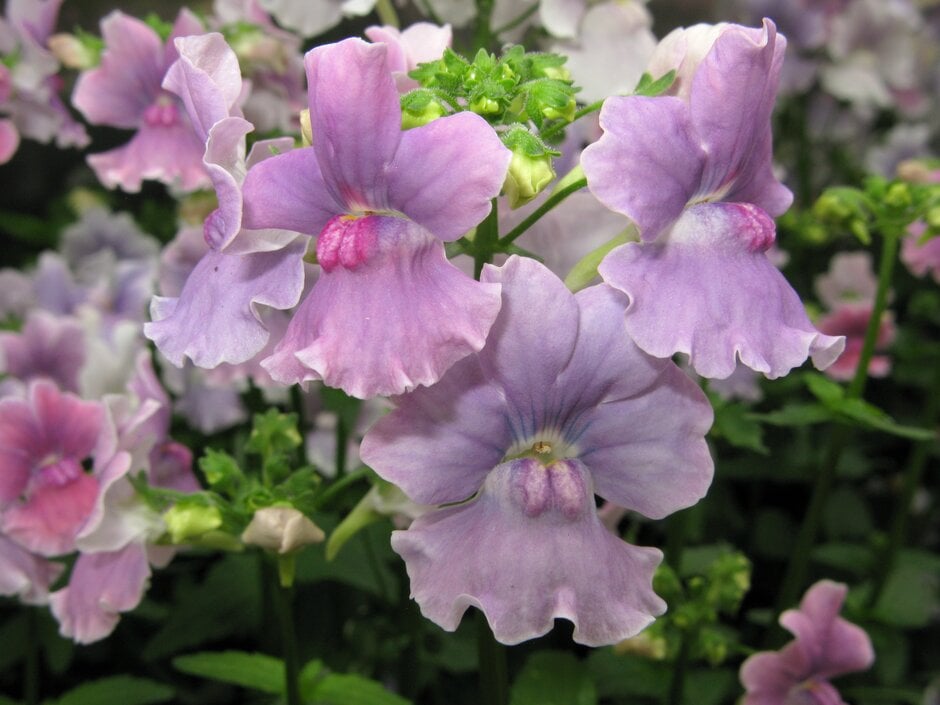
A compact, bushy, short-lived perennial to about 30cm, usually grown as a bedding plant. It has small, mid-green leaves and scented, lilac-blue flowers borne almost continuously from late spring to early autumn
Size
Ultimate height
0.1–0.5 metresTime to ultimate height
1 yearUltimate spread
0.1–0.5 metresGrowing conditions
Moisture
Moist but well–drained, Well–drainedpH
Acid, Alkaline, NeutralColour & scent
| Stem | Flower | Foliage | Fruit | |
| Spring | Purple Blue | Green | ||
|---|---|---|---|---|
| Summer | Purple Blue | Green | ||
| Autumn | Purple Brown Blue | Green | ||
| Winter | Green |
Position
- Full sun
- Partial shade
Aspect
East–facing or South–facing or West–facing
Exposure
Sheltered Hardiness
H3Botanical details
- Family
- Scrophulariaceae
- Native to GB / Ireland
- No
- Foliage
- Semi evergreen
- Habit
- Bushy
- Genus
Nemesia can be annuals, perennials or sub-shrubs of bushy habit, with simple, opposite leaves and 2-lipped flowers in short racemes or solitary in the leaf axils
- Name status
Accepted
How to grow
Cultivation
Grows best in moist, fertile soil in full sun, but is tolerant of light shade; flowering will be affected in dry weather unless watered freely
Propagation
Propagate by softwood cuttings from the ends of non-flowering shoots in late summer and overwinter in frost-free conditions or propagate by softwood cuttings in spring
Suggested planting locations and garden types
- City and courtyard gardens
- Coastal
- Cottage and informal garden
- hanging basket
- Patio and container plants
- Wildlife gardens
- Bedding
- Flower borders and beds
Pruning
Pinch out growing tips to produce bushy plants, and trim off flowering shoots when initial flowering is finished to promote more flowers
Pests
Generally pest-free
Diseases
May be susceptible to root rots in wet soils
Get involved
The Royal Horticultural Society is the UK’s leading gardening charity. We aim to enrich everyone’s life through plants, and make the UK a greener and more beautiful place.