Dierama trichorhizum
hairy-rooted wandflower
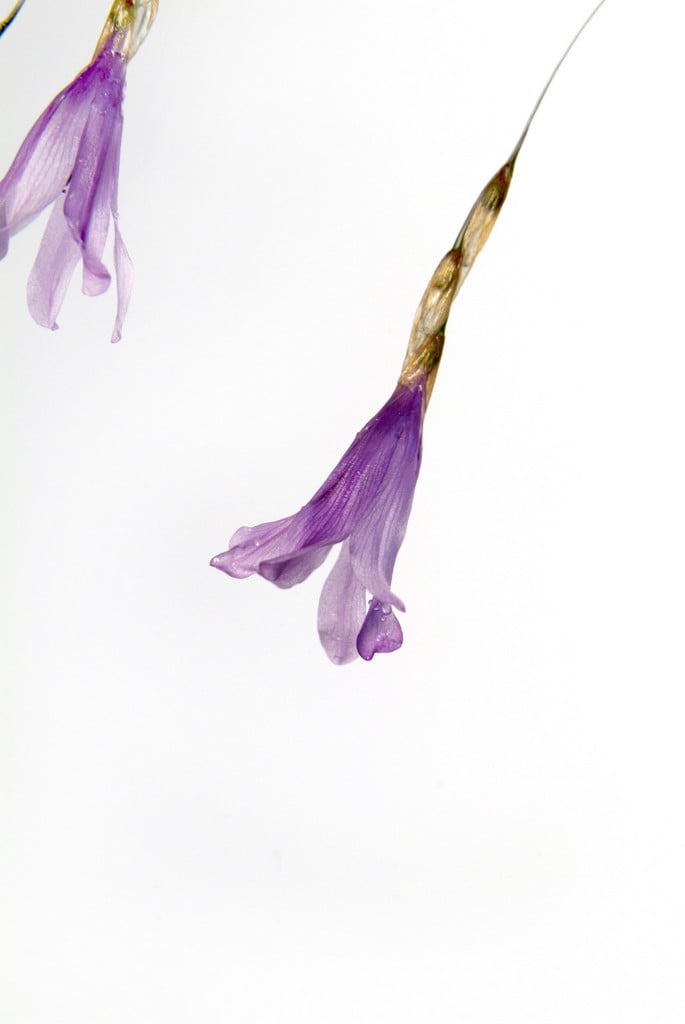
A cormous perennial forming a clump of leathery, grass-like, evergreen leaves. Upright stems support small clusters of narrow, hanging, pink to pale purple bells with silvery bracts in summer
Buy this plant
Size
Ultimate height
0.1–0.5 metresTime to ultimate height
2–5 yearsUltimate spread
0.1–0.5 metresGrowing conditions
Moisture
Well–drainedpH
Acid, Alkaline, NeutralColour & scent
| Stem | Flower | Foliage | Fruit | |
| Spring | Green | |||
|---|---|---|---|---|
| Summer | Grey Silver Purple Pink | Green | ||
| Autumn | Green | |||
| Winter | Green |
Position
- Full sun
Aspect
South–facing or West–facing
Exposure
Sheltered Hardiness
H4Botanical details
- Family
- Iridaceae
- Native to GB / Ireland
- No
- Foliage
- Evergreen
- Habit
- Columnar upright
- Genus
Dierama are evergreen, clump-forming cormous perennials with long, narrow leaves and slender arching stems bearing nodding, bell-shaped flowers in summer
- Name status
Correct
- Plant range
- South Africa (Natal)
How to grow
Cultivation
Grow in humus-rich, well-drained soil in a sheltered situation with full sun or grow in an alpine house or frame in peat-free, loam-based potting compost in full light
Propagation
Propagate by seed in containers in a cold frame as soon as ripe or by division in spring. Young plants and divisions can be slow to establish
Suggested planting locations and garden types
- City and courtyard gardens
- Patio and container plants
- Rock garden
Pruning
Tidy any winter-damaged foliage by cutting to the base in spring
Pests
Generally pest-free
Diseases
Generally disease-free
Get involved
The Royal Horticultural Society is the UK’s leading gardening charity. We aim to enrich everyone’s life through plants, and make the UK a greener and more beautiful place.