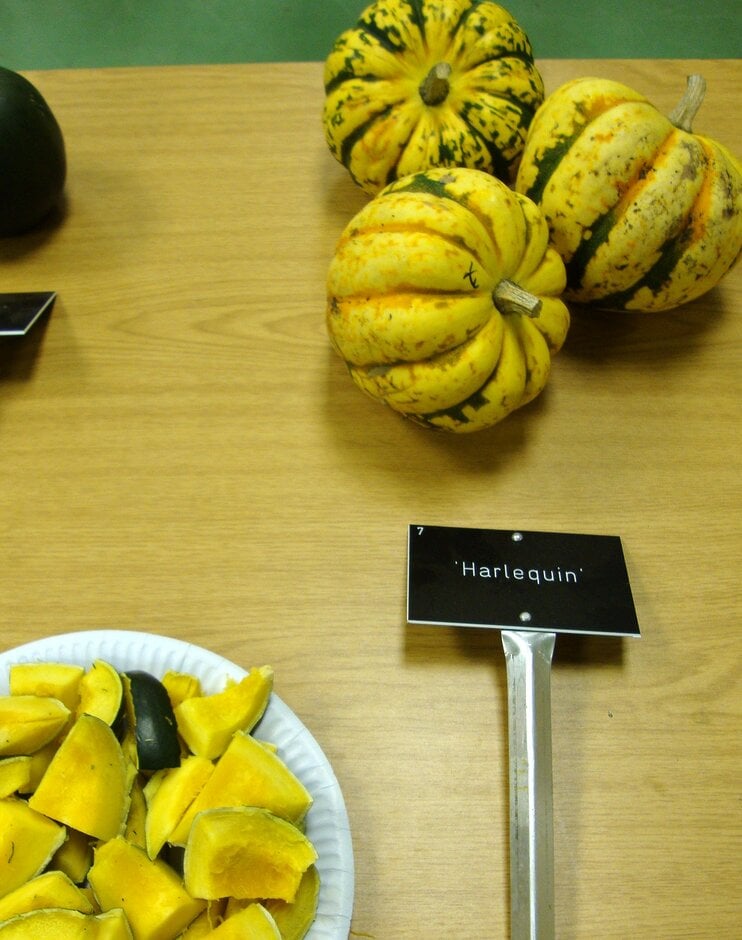
Cucurbita pepo 'Harlequin'

RHS Plant Profile
squash 'Harlequin'
squash 'Harlequin' Michael John Day

Synonyms

Cucurbita maxima 'Harlequin'

Award of Garden MeritPlants for pollinators
Annual Biennial

An early-maturing winter squash producing acorn or dumpling-shaped fruits to around 700g on trailing vines. Fruits have green, yellow and orange-striped skins encasing a very sweet, moist flesh

Position

Full sun

Soil Types

Sand, Loam

Max Height

0.5-1 metres

Max Spread

1.5-2.5 metres

Size

Time to Maturity
1 year
Max Spread
1.5-2.5 metres
Max Height
0.5-1 metres

Growing Conditions

Sand Loam
Moisture
Well–drained or Moist but well–drained
pH
Acid or Neutral

Position

Full sun
Aspect
South–facing or West–facing
Exposure
Sheltered
Hardiness
H2

Colour & Scent

Season Stem Flower Foliage Fruit
Spring
Summer
Autumn
Winter

Botanical Details

Family
Cucurbitaceae
Native to GB/Ireland
No
Foliage
Deciduous
Habit
Bushy, Trailing
Potentially harmful
Humans/Pets: If crop is bitter, don't eat or feed to pets. Wear gloves and other protective equipment when handling
Genus
A small genus of climbing or trailing, annual herbaceous fruits. Several edible species are cultivated for food and other uses. Native to Central and South America. Solitary, star-shaped flowers are usually golden-yellow. Leaves are palmately lobed, covered with tiny, prickly hairs
Name Status
Unresolved

How to Grow

Cultivation

Grow in rich, fertile, well drained soil in full sun. Start indoors from mid-late April, sowing in individual pots with seeds on their side about 1.5cm deep. Harden off before June then transplant outdoors to final growing position. See cucurbit cultivation for further advice

Propagation

Propagate by seed. See sowing vegetable seeds or sowing seeds indoors for further advice

Suggested planting locations and garden types

  • Patio and container plants
  • Wildlife gardens

Pruning

No pruning required

Pests

May be susceptible to slugs and snails

Diseases

May be susceptible to grey moulds and powdery mildews