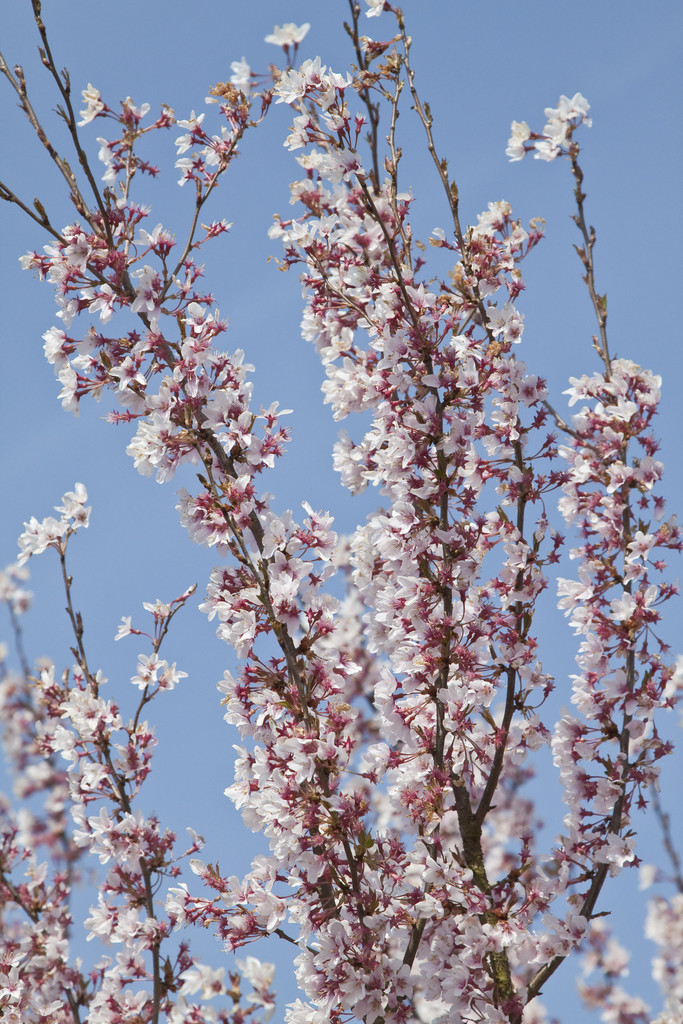
Prunus pendula f. ascendens 'Rosea'

RHS Plant Profile
ascending weeping cherry 'Rosea'
ascending weeping cherry 'Rosea' RHS

Synonyms

Prunus 'Beni-higan'
Prunus pendula 'Ascendens Rosea'
Prunus × subhirtella 'Ascendens Rosea'
Prunus pendula f. ascendens 'Rosea'
Prunus × subhirtella 'Rosea'
Prunus pendula var. ascendens 'Rosea'
Prunus × subhirtella var. ascendens 'Rosea'

Award of Garden MeritPlants for pollinators
Trees

A small, vase-shaped, then spreading, deciduous tree about 6m tall with bronze-flushed, dark green leaves turning orange and yellow in autumn. The very small, small, single flowers are shell pink, opening in mid-spring from red buds

Position

Full sun

Soil Types

Chalk, Clay, Loam, Sand

Max Height

4-8 metres

Max Spread

4-8 metres

Size

Time to Maturity
10–20 years
Max Spread
4-8 metres
Max Height
4-8 metres

Growing Conditions

Chalk Clay Loam Sand
Moisture
Moist but well–drained or Well–drained
pH
Acid or Alkaline or Neutral

Position

Full sun
Aspect
South–facing or North–facing or West–facing or East–facing
Exposure
Exposed or Sheltered
Hardiness
H6

Colour & Scent

Season Stem Flower Foliage Fruit
Spring
Summer
Autumn
Winter

Botanical Details

Family
Rosaceae
Native to GB/Ireland
No
Foliage
Deciduous
Habit
Bushy
Genus
Prunus can be deciduous or evergreen trees or shrubs with showy flowers in spring, and often good autumn foliage colour. Some have edible fruit in autumn, and a few species have ornamental bark
Name Status
Accepted

How to Grow

Cultivation

Grow in moderately fertile soil in full sun

Propagation

Propagate by chip budding or grafting, although softwood cuttings in early summer with bottom heat can be successful

Suggested planting locations and garden types

  • Cottage and informal garden
  • Wildlife gardens
  • Wildflower meadow
  • Flower borders and beds

Pruning

Pruning group 1. Prune in mid-summer if silver leaf is a problem

Pests

May be susceptible to caterpillars, leaf-mining moths and aphids

Diseases

May be susceptible to peach leaf curl, silver leaf, bacterial canker, blossom wilt and honey fungus