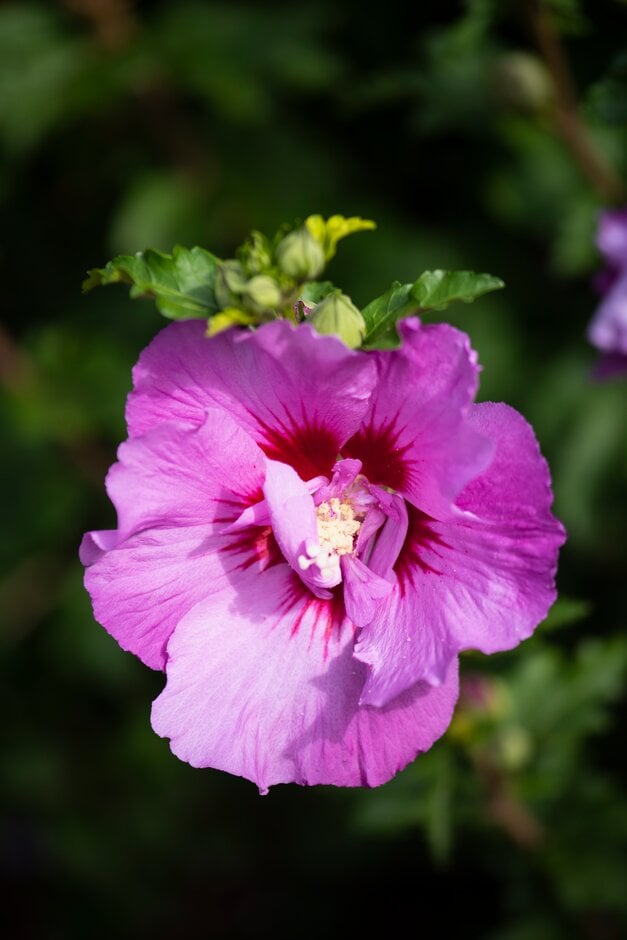
Hibiscus 'Eruption'

<em>Hibiscus</em> 'Eruption' RHS / Joanna Kossak

Synonyms

Hibiscus syriacus 'Eruption'

Shrubs

A compact shrub with purple-tinted oakleaf-shaped leaves. It produces lots of large, semi-double hot pink flowers, darker on the inside, from June until August. Good as a specimen plant or in borders

Position

Full sun

Soil Types

Chalk, Clay, Loam, Sand

Max Height

1-1.5 metres

Max Spread

0.5-1 metres

Size

Time to Maturity
10–20 years
Max Spread
0.5-1 metres
Max Height
1-1.5 metres

Growing Conditions

Chalk Clay Loam Sand
Moisture
Moist but well–drained or Well–drained
pH
Acid or Neutral

Position

Full sun
Aspect
South–facing or West–facing
Exposure
Sheltered
Hardiness
H5

Colour & Scent

Season Stem Flower Foliage Fruit
Spring
Summer
Autumn
Winter

Botanical Details

Family
Malvaceae
Native to GB/Ireland
No
Foliage
Deciduous
Habit
Bushy
Genus
Hibiscus can be deciduous or evergreen shrubs, trees, annuals or perennials, with simple or palmately lobed leaves and large, funnel-shaped flowers over a long flowering season
Name Status
Accepted

How to Grow

Cultivation

Grow in moist but well-drained soil in a sheltered position in full sun

Propagation

Propagate by semi-hardwood cuttings

Suggested planting locations and garden types

  • Cottage and informal garden
  • Coastal
  • Flower borders and beds

Pruning

Pruning group 1

Pests

May be susceptible to aphids, scale insects, mealybugs and glasshouse whitefly when grown under glass

Diseases

May be susceptible to honey fungus (rarely) and powdery mildews