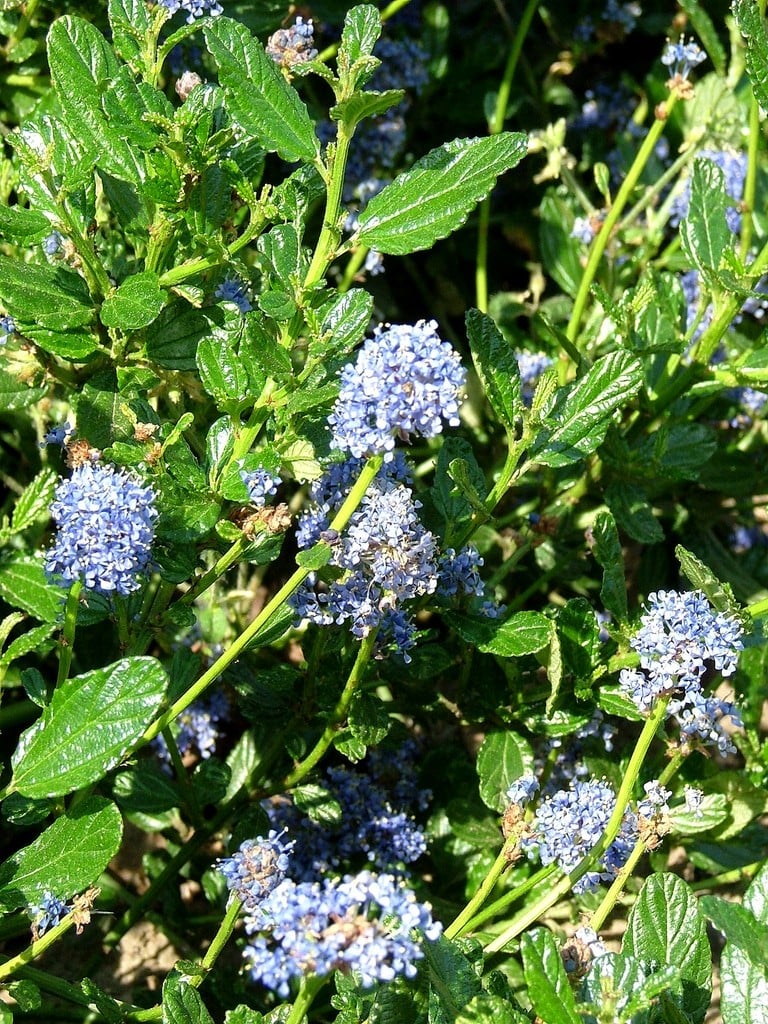
Size
Ultimate height
4–8 metresTime to ultimate height
5–10 yearsUltimate spread
4–8 metresGrowing conditions
Moisture
Well–drainedpH
Alkaline, Neutral, AcidColour & scent
| Stem | Flower | Foliage | Fruit | |
| Spring | Blue | Green | ||
|---|---|---|---|---|
| Summer | Green | |||
| Autumn | Green | |||
| Winter | Green |
Position
- Full sun
Aspect
South–facing or West–facing
Exposure
ShelteredDrought resistance
Yes Hardiness
H4Botanical details
- Family
- Rhamnaceae
- Native to GB / Ireland
- No
- Foliage
- Evergreen
- Habit
- Bushy
- Genus
Ceanothus can be evergreen or deciduous shrubs or small trees, with simple leaves and small blue, pink or white flowers in profuse axillary or terminal clusters. They are fast-growing but may be short-lived
- Name status
Correct
- Plant range
- W US
How to grow
Cultivation
Grow in fertile, well-drained soil in full sun with shelter from strong, cold winds. Lime tolerant but may become chlorotic on shallow chalk soils. See ceanothus cultivation
Propagation
Propagate by semi-hardwood cuttings in mid- to late summer
Suggested planting locations and garden types
- City and courtyard gardens
- Coastal
- Cottage and informal garden
- Mediterranean climate plants
- Wildlife gardens
- Wall side borders
- Flower borders and beds
Pruning
Pruning group 8 after flowering and pruning group 13 for wall-training
Pests
May be susceptible to scale insects
Diseases
May be susceptible to honey fungus
Get involved
The RHS is the UK’s gardening charity, helping people and plants to grow - nurturing a healthier, happier world, one person and one plant at a time.