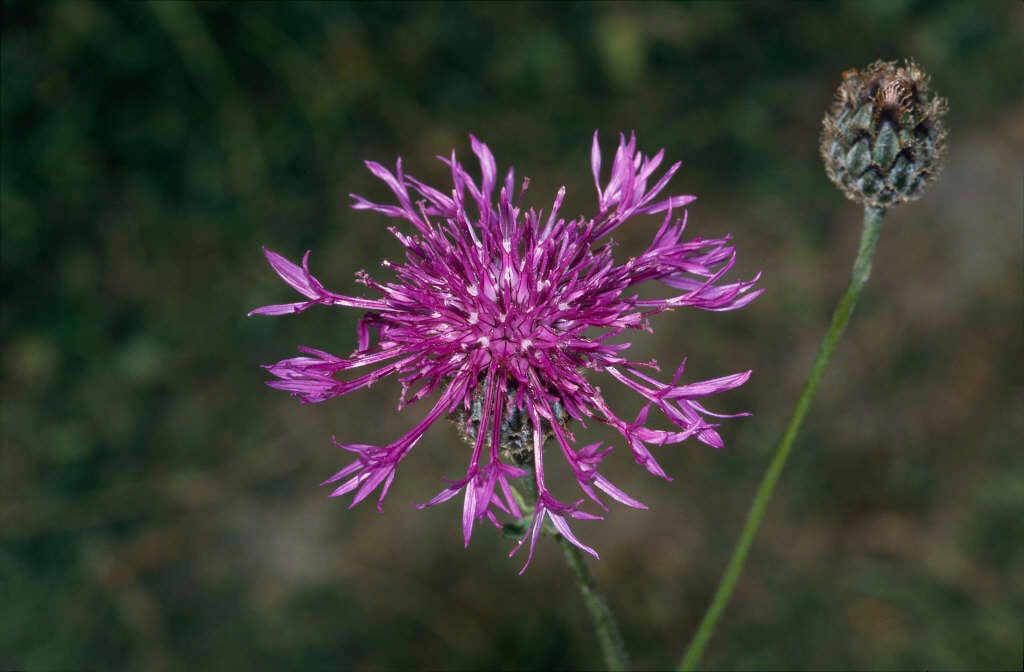
Centaurea scabiosa

RHS Plant Profile
greater knapweed
greater knapweed RHS 2002

Other common names

black top, pengaled fawr

Synonyms

Centaurea scabiosa var. petrophila

Plants for pollinators
Herbaceous Perennial

An upright perennial to about 1.5m, with branched stems and greyish-green, broadly lance-shaped leaves to 25cm long, and reddish-purple flowers heads to 5cm across, usually with enlarged outer florets, from mid to late summer

Position

Full sun

Soil Types

Chalk, Loam, Sand

Max Height

1-1.5 metres

Max Spread

0.5-1 metres

Size

Time to Maturity
2–5 years
Max Spread
0.5-1 metres
Max Height
1-1.5 metres

Growing Conditions

Chalk Loam Sand
Moisture
Well–drained
pH
Acid or Alkaline or Neutral

Position

Full sun
Aspect
West–facing or South–facing or East–facing
Exposure
Exposed or Sheltered
Hardiness
H6

Colour & Scent

Season Stem Flower Foliage Fruit
Spring
Summer
Autumn
Winter

Botanical Details

Family
Asteraceae
Native to GB/Ireland
Yes
Foliage
Deciduous
Habit
Clump forming
Genus
Centaurea may be annuals, perennials or subshrubs, with simple or pinnately lobed leaves and showy thistle-like flowers-heads, often with enlarged outer florets
Name Status
Correct
Plant Range
Europe, Temperate Asia

How to Grow

Cultivation

Prefers well-drained soil in a sunny position. Especially tolerant of dry alkaline soils

Propagation

Propagate by seed in spring, or propagate by division in spring or autumn

Suggested planting locations and garden types

  • Wildlife gardens
  • Wildflower meadow
  • Cottage and informal garden
  • Flower borders and beds

Pruning

Self-seeds readily so prune after flowering if seed is not required

Pests

Generally pest-free

Diseases

May be susceptible to Powdery mildews