× Amarine tubergenii 'Anastasia'PBR (Belladiva Series)
van Tubergen amarine 'Anastasia'
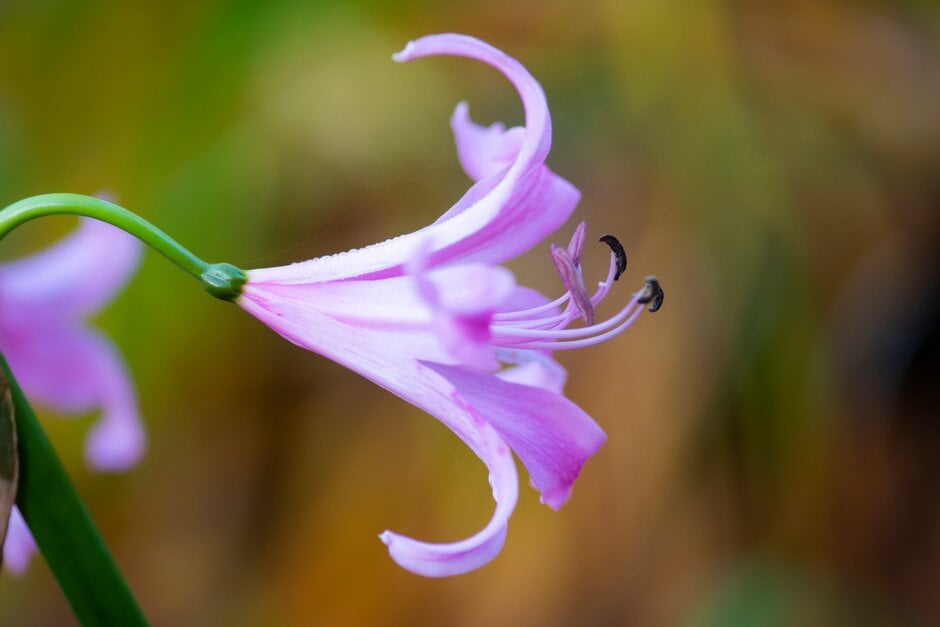
A bulbous perennial to about 50cm, producing clusters of shocking pink, trumpet-shaped, scented blooms on strong, upright stems in autumn, followed by bright green, glossy, strap-shaped leaves
Buy this plant
Size
Ultimate height
0.1–0.5 metresTime to ultimate height
2–5 yearsUltimate spread
0.1–0.5 metresGrowing conditions
Moisture
Well–drainedpH
Acid, Alkaline, NeutralColour & scent
| Stem | Flower | Foliage | Fruit | |
| Spring | ||||
|---|---|---|---|---|
| Summer | ||||
| Autumn | Pink | Green | ||
| Winter | Green |
Position
- Full sun
Aspect
West–facing or South–facing
Exposure
Sheltered Hardiness
H4Botanical details
- Family
- Amaryllidaceae
- Native to GB / Ireland
- No
- Foliage
- Deciduous
- Habit
- Clump forming, Columnar upright
- Potentially harmful
- Ingestion cause mild stomach upset. Wear gloves and other protective equipment when handling
- Genus
× Amarine are bigeneric hybrids between Amaryllis and Nerine. They are bulbous perennials producing clusters of lily-like flowers in shades of pink, smaller than Amaryllis, and more trumpet-like than Nerine. The flowers are followed by strap-shaped leaves
- Name status
Accepted
How to grow
Cultivation
Plant in spring in moderately-fertile, well-drained soil, with the bulb tips just above the surface. Protect in colder areas with a deep, dry mulch over winter
Propagation
Propagate by division after flowering
Suggested planting locations and garden types
- City and courtyard gardens
- Coastal
- Cottage and informal garden
- Gravel garden
- Mediterranean climate plants
- Patio and container plants
- Cut flowers
- Wall side borders
- Flower borders and beds
Pruning
No pruning required
Pests
May be susceptible to slugs
Diseases
Generally disease-free
Get involved
The RHS is the UK’s gardening charity, helping people and plants to grow - nurturing a healthier, happier world, one person and one plant at a time.