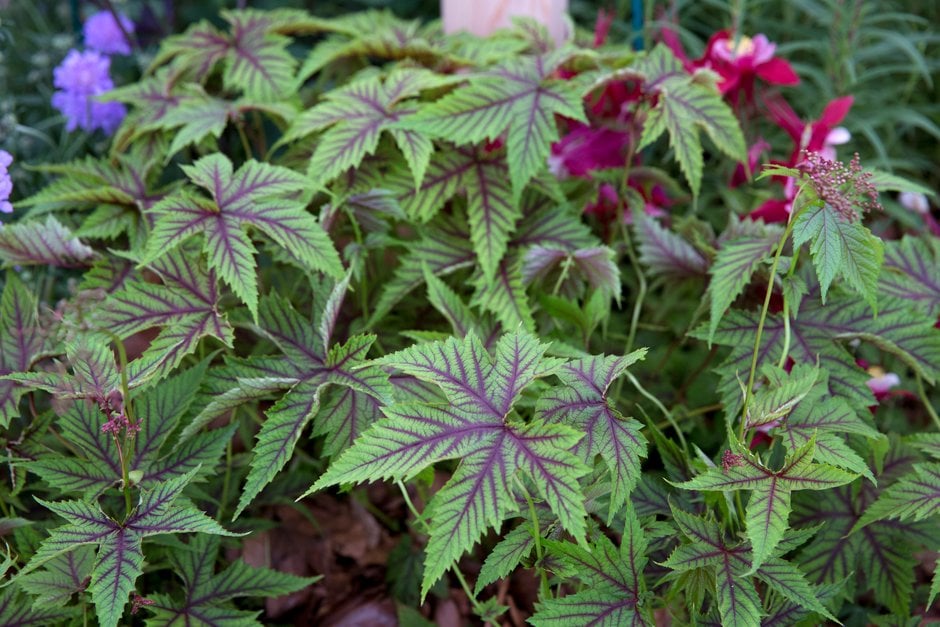
Filipendula multijuga 'Hjördis'
A clump-forming perennial to 80cm tall when in flower, producing bright green, toothed, palmate leaves with bold, maroon veins. From mid to late summer it bears plumes of fluffy, pale pink flowers, held on wiry stems above the foliage

Buy this plant
Size
Ultimate height
0.5–1 metresTime to ultimate height
2–5 yearsUltimate spread
0.1–0.5 metresGrowing conditions
Moisture
Moist but well–drainedpH
Acid, Alkaline, NeutralColour & scent
| Stem | Flower | Foliage | Fruit | |
| Spring | Green Red | |||
|---|---|---|---|---|
| Summer | Pink | Green Red | ||
| Autumn | Green Red | |||
| Winter |
Position
- Partial shade
Aspect
East–facing or North–facing or West–facing
Exposure
Sheltered Hardiness
H6Botanical details
- Family
- Rosaceae
- Native to GB / Ireland
- No
- Foliage
- Deciduous
- Habit
- Clump forming
- Genus
Filipendula are rhizomatous herbaceous perennials with pinnately divided leaves and large sprays of small rosy-pink or white flowers borne on leafy stems well above the foliage
- Name status
Unresolved
How to grow
Cultivation
Grow in moderately fertile, leafy, moist but well-drained soil in partial shade. Mulch in spring
Propagation
Propagate by seed, division or root cuttings
Suggested planting locations and garden types
- Cottage and informal garden
- Flower borders and beds
Pruning
Cut back to ground level in early winter
Pests
Generally pest-free
Diseases
May be susceptible to Powdery mildews
Get involved
The Royal Horticultural Society is the UK’s leading gardening charity. We aim to enrich everyone’s life through plants, and make the UK a greener and more beautiful place.