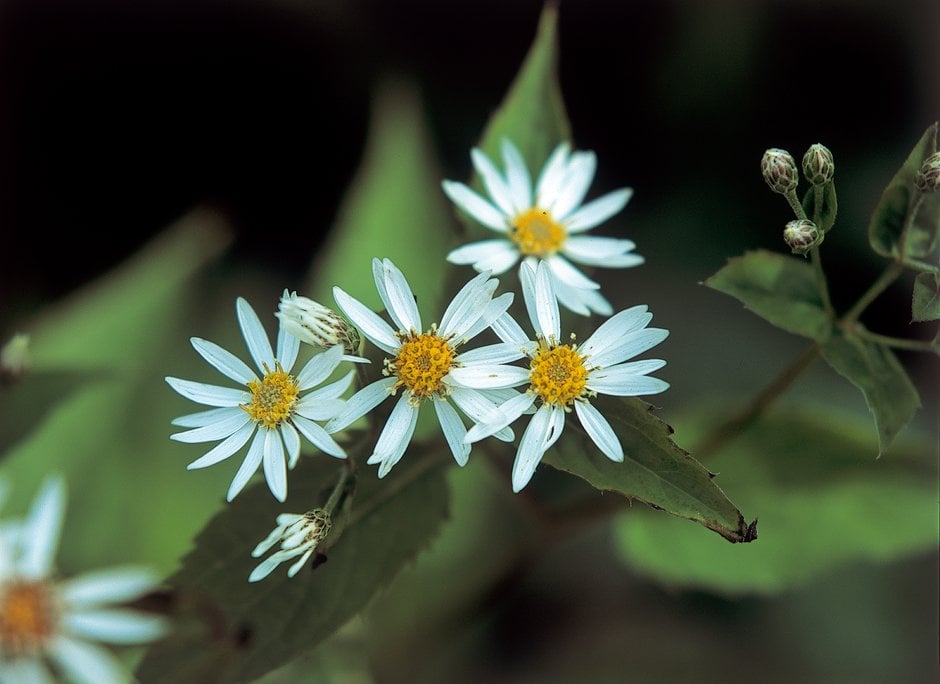
Eurybia schreberi

RHS Plant Profile
Schreber's aster
Schreber's aster RHS

Other common names

nettle-leaved Michaelmas daisy

Synonyms

Aster schreberi

Plants for pollinators
Herbaceous Perennial

A gently spreading, rhizomatous perennial with dark green, tooth-edged foliage. Open clusters of white, daisy-like flowers with dark yellow centres are produced in late summer and early autumn

Position

Full shade, Full sun, Partial shade

Soil Types

Chalk, Clay, Loam, Sand

Max Height

0.1-0.5 metres

Max Spread

0.1-0.5 metres

Size

Time to Maturity
2–5 years
Max Spread
0.1-0.5 metres
Max Height
0.1-0.5 metres

Growing Conditions

Chalk Clay Loam Sand
Moisture
Moist but well–drained or Well–drained
pH
Acid or Alkaline or Neutral

Position

Full shade Full sun Partial shade
Aspect
West–facing or East–facing or South–facing or North–facing
Exposure
Exposed or Sheltered
Hardiness
H7

Colour & Scent

Season Stem Flower Foliage Fruit
Spring
Summer
Autumn
Winter

Botanical Details

Family
Asteraceae
Native to GB/Ireland
No
Foliage
Deciduous
Habit
Bushy
Genus
Eurybia is a genus of woody perennials. Leaf shape can differ between varieties and flowers can be white or light pink to purple with yellow corona.
Name Status
Correct
Plant Range
E North America

How to Grow

Cultivation

Best in humus-rich soil in partial shade, but tolerates most conditions including dry shade. Divide every 3-4 years to maintain vigour and flower quality

Propagation

Propagate by seed or by division, preferably in spring, replanting only vigorous, young shoots

Suggested planting locations and garden types

  • Cottage and informal garden
  • Prairie planting
  • Cut flowers
  • Flower borders and beds

Pruning

Cut down after flowering

Pests

Vulnerable to eelworms, slugs, snails and aphids

Diseases

May be susceptible fusarium wilt, leaf spot and grey moulds