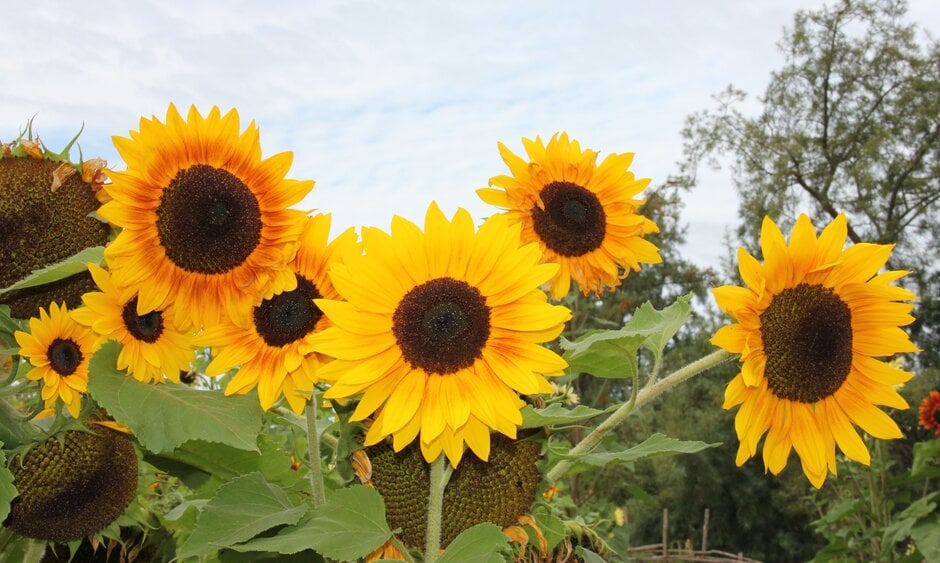
Helianthus annuus 'Solar Power'

RHS Plant Profile
sunflower 'Solar Power'
sunflower 'Solar Power' RHS
Plants for pollinators
Annual Biennial

A tall and branching, fast-growing annual with oval to heart-shaped, green leaves. In summer, they create a wonderful display of flowers, they have a striking halo of orange marroon around the dark brown centre and orangey yellow tips to the petals, like. These blooms are pollen free and ideal for using as cut flowers, attracting butterflies and bees but not producing seed

Position

Full sun

Soil Types

Chalk, Clay, Loam, Sand

Max Height

1.5-2.5 metres

Max Spread

0.5-1 metres

Size

Time to Maturity
1 year
Max Spread
0.5-1 metres
Max Height
1.5-2.5 metres

Growing Conditions

Chalk Clay Loam Sand
Moisture
Moist but well–drained
pH
Acid or Alkaline or Neutral

Position

Full sun
Aspect
South–facing or West–facing
Exposure
Sheltered
Hardiness
H2

Colour & Scent

Season Stem Flower Foliage Fruit
Spring
Summer
Autumn
Winter

Botanical Details

Family
Asteraceae
Native to GB/Ireland
No
Foliage
Deciduous
Habit
Spreading branched
Genus
Helianthus can be tall, erect annuals, tuberous or rhizomatous perennials, with coarse simple leaves and large daisy-like flower-heads
Name Status
Unresolved

How to Grow

Cultivation

Grow in moderately fertile, neutral to alkaline, humus-rich, moist but well-drained soil in full sun. This plant was included in the RHS Helianthus (sunflower) trial 2024 https://www.rhs.org.uk/plants/trials-awards/plant-trial-results/fleuroselect-sunflowers

Propagation

Propagate by seed or division. Divide established clumps every 2-4 years to both increase plants and retain vigour. See sowing seeds indoors for further advice

Suggested planting locations and garden types

  • Wildlife gardens
  • Cottage and informal garden
  • Flower borders and beds
  • Cut flowers
  • Wall side borders

Pruning

Cut back old stems after flowering as they die down for the winter

Pests

May be susceptible to slugs and snails

Diseases

May be susceptible to Powdery mildews and sclerotinia diseases