Hylotelephium 'Class Act'PBR
stonecrop 'Class Act'
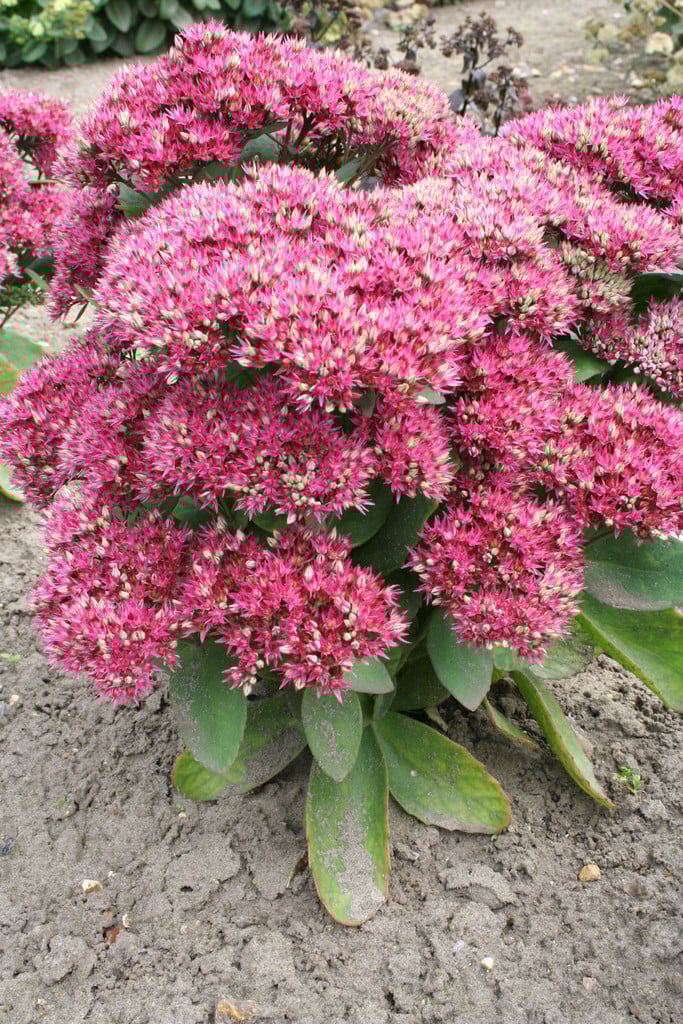
A clump-forming, deciduous perennial to 45cm high, spread to 50cm wide, with oblong mid-green, slightly galucous leaves on darker, brown-tinged stems. Flowerheads are large, to 11cm across, with grey-green to whitish buds and deep burgundy red flowers. Habit sturdy and compact
Size
Ultimate height
0.1–0.5 metresTime to ultimate height
2–5 yearsUltimate spread
0.1–0.5 metresGrowing conditions
Moisture
Well–drainedpH
Alkaline, NeutralColour & scent
| Stem | Flower | Foliage | Fruit | |
| Spring | Green | |||
|---|---|---|---|---|
| Summer | Brown Green | Pink Red | Green | |
| Autumn | Brown Green | Pink Red | Green | |
| Winter |
Position
- Full sun
Aspect
South–facing
Exposure
Exposed or ShelteredDrought resistance
Yes Hardiness
H7Botanical details
- Family
- Crassulaceae
- Native to GB / Ireland
- No
- Foliage
- Deciduous
- Habit
- Clump forming
- Genus
Hylotelephium are succulent perennials with heads of small star-shaped flowers in summer to autumn. They are sometimes included within the genus Sedum
- Name status
Accepted
How to grow
Cultivation
Grow in moderately fertile, well-drained, neutral to slightly alkaline soil in full sun. A drought-tolerant plant
Propagation
Propagate by division in spring. Propagate by softwood cuttings of non-flowering shoots in early summer
Suggested planting locations and garden types
- Patio and container plants
- Cottage and informal garden
- Gravel garden
- Wildlife gardens
- Flower borders and beds
Pruning
Cut back after flowering to maintain shape or leave seedheads overwinter
Pests
May be susceptible to slugs, snails and vine weevil
Diseases
May be susceptible to root rot
Get involved
The Royal Horticultural Society is the UK’s leading gardening charity. We aim to enrich everyone’s life through plants, and make the UK a greener and more beautiful place.