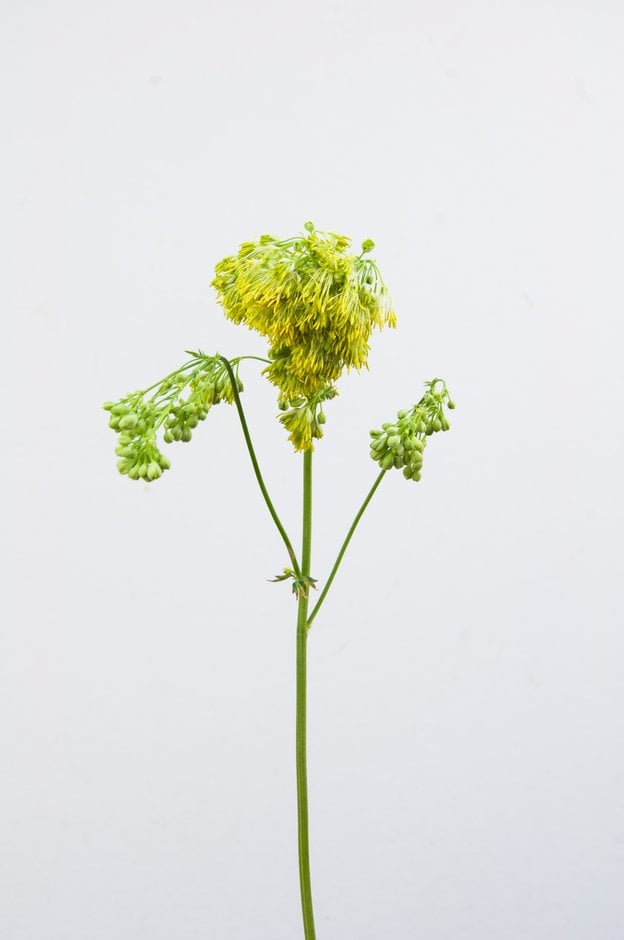
Thalictrum flavum subsp. glaucum 'Ruth Lynden-Bell'

RHS Plant Profile
glaucous-leaved yellow meadow rue 'Ruth Lynden-Bell'
glaucous-leaved yellow meadow rue 'Ruth Lynden-Bell' RHS
Award of Garden MeritPlants for pollinators
Herbaceous Perennial

A vigorous, clump-forming, rhizomatous herbaceous perennial to about 1.2m high, with greyish, blue-green stems and deeply divided greyish blue-green foliage. In summer clusters of fluffy, fragrant creamy-yellow flowers are produced

Position

Full sun, Partial shade

Soil Types

Chalk, Clay, Loam, Sand

Max Height

1-1.5 metres

Max Spread

0.1-0.5 metres

Size

Time to Maturity
2–5 years
Max Spread
0.1-0.5 metres
Max Height
1-1.5 metres

Growing Conditions

Chalk Clay Loam Sand
Moisture
Moist but well–drained
pH
Acid or Alkaline or Neutral

Position

Full sun Partial shade
Aspect
South–facing or West–facing or East–facing
Exposure
Exposed or Sheltered
Hardiness
H7

Colour & Scent

Fragrance Flower
Season Stem Flower Foliage Fruit
Spring
Summer
Autumn
Winter

Botanical Details

Family
Ranunculaceae
Native to GB/Ireland
No
Foliage
Deciduous
Habit
Clump forming
Genus
Thalictrum can be rhizomatous or tuberous perennials with ternately or pinnately divided, often attractive foliage, and panicles or racemes of small flowers with showy stamens and sometimes large colourful petal-like sepals
Name Status
Accepted

How to Grow

Cultivation

Grow in moist, humus-rich soil, best partial shade but can tolerate drier soil and more sun than many other species. May need staking. See staking perennials for further advice

Propagation

Propagate by division as new growth begins in spring; divisions may be slow to re-establish

Suggested planting locations and garden types

  • Cottage and informal garden
  • Wildlife gardens
  • Flower borders and beds

Pruning

Faded flower stems can be cut back in late autumn or in spring before new growth starts emerging

Pests

May be susceptible to slugs

Diseases

May be susceptible to powdery mildews in dry conditions