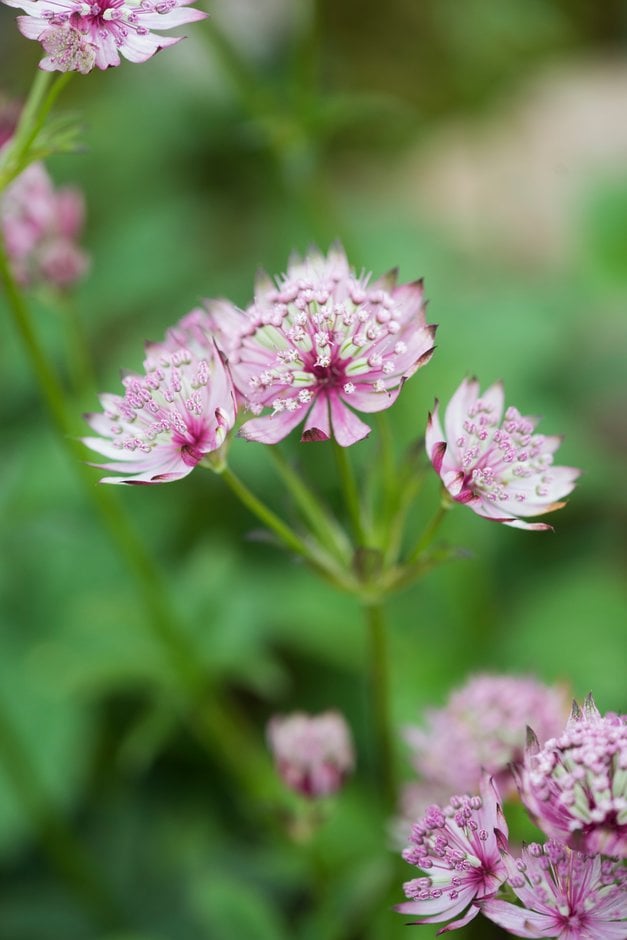
Astrantia major Sparkling Stars Series

RHS Plant Profile
masterwort 'Sparkling Stars'
masterwort 'Sparkling Stars' RHS / Joanna Kossak
Plants for pollinators
Herbaceous Perennial

'Sparkling Stars' is a newer variety of Astrantia with reddish-pink flowers and lighter pink inner petals like pincushions. Flowers appear from mid to late summer and attract bees and butterflies.

Position

Full sun, Partial shade

Soil Types

Chalk, Clay, Loam, Sand

Max Height

0.5-1 metres

Max Spread

0.5-1 metres

Size

Time to Maturity
2–5 years
Max Spread
0.5-1 metres
Max Height
0.5-1 metres

Growing Conditions

Chalk Clay Loam Sand
Moisture
Moist but well–drained or Poorly–drained
pH
Acid or Alkaline or Neutral

Position

Full sun Partial shade
Aspect
South–facing or North–facing or West–facing or East–facing
Exposure
Sheltered
Hardiness
H7

Colour & Scent

Season Stem Flower Foliage Fruit
Spring
Summer
Autumn
Winter

Botanical Details

Family
Apiaceae
Native to GB/Ireland
No
Foliage
Deciduous
Habit
Bushy
Genus
Astrantia are clump-forming herbaceous perennials with palmately lobed basal leaves and branched, erect, wiry stems bearing compact umbels of tiny flowers surrounded by a rosette of showy bracts
Name Status
Unresolved

How to Grow

Cultivation

Best grown in moist, fertile, humus-rich soil in sun or partial shade but will tolerate drier conditions

Propagation

Propagate by seed sown in pots in a cold frame as soon as seed is ripe or propagate by division in spring

Suggested planting locations and garden types

  • Cottage and informal garden
  • City and courtyard gardens
  • Gravel garden
  • Wildlife gardens
  • Flower borders and beds

Pruning

Deadhead before seed is ripe to prevent self-seeding

Pests

May be susceptible to Astrantia leaf miner

Diseases

May be susceptible to powdery mildews