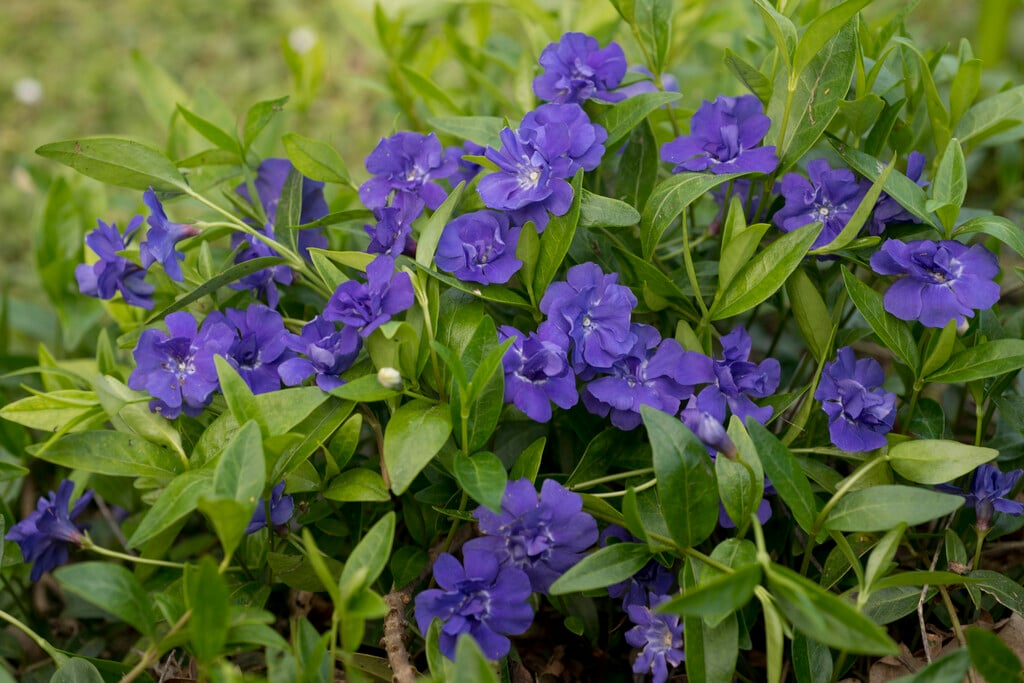
Vinca minor 'Temptation' (d)

RHS Plant Profile
lesser periwinkle 'Temptation'
lesser periwinkle 'Temptation' visionspictures.com
Shrubs Herbaceous Perennial

An evergreen perennial or subshrub, to around 20cm high but spreading via long, trailing shoots that root at the nodes. Leaves are small, oval to elliptic and glossy deep green. Violet-coloured double flowers are produced from late spring to autumn

Position

Full sun, Partial shade, Full shade

Soil Types

Chalk, Clay, Loam, Sand

Max Height

0.1-0.5 metres

Max Spread

1-1.5 metres

Size

Time to Maturity
2–5 years
Max Spread
1-1.5 metres
Max Height
0.1-0.5 metres

Growing Conditions

Chalk Clay Loam Sand
Moisture
Moist but well–drained or Well–drained
pH
Acid or Alkaline or Neutral

Position

Full sun Partial shade Full shade
Aspect
East–facing or North–facing or South–facing or West–facing
Exposure
Exposed or Sheltered
Hardiness
H6

Colour & Scent

Season Stem Flower Foliage Fruit
Spring
Summer
Autumn
Winter

Botanical Details

Family
Apocynaceae
Native to GB/Ireland
No
Foliage
Evergreen
Habit
Trailing, Matforming
Genus
Vinca can be evergreen subshrubs or herbaceous perennials, with simple, paired leaves and solitary, 5-lobed, salver-shaped flowers in the leaf axils
Name Status
Accepted

How to Grow

Cultivation

Grow in any but very dry soil, in sun or shade; flowering is best in full sun. Has potential to become a nuisance if not managed well

Propagation

Propagate by division or semi-ripe cuttings

Suggested planting locations and garden types

  • Cottage and informal garden
  • Low Maintenance
  • Banks and slopes
  • Ground cover

Pruning

To restrict growth, cut back hard in early spring

Pests

Generally pest-free

Diseases

May be susceptible to fungal infections including Phoma blight, rhizoctonia root rot and rust diseases