Dianthus Olivia Sweet ('Hilbealoswee') (Beauties Series)
pink [Olivia Sweet]
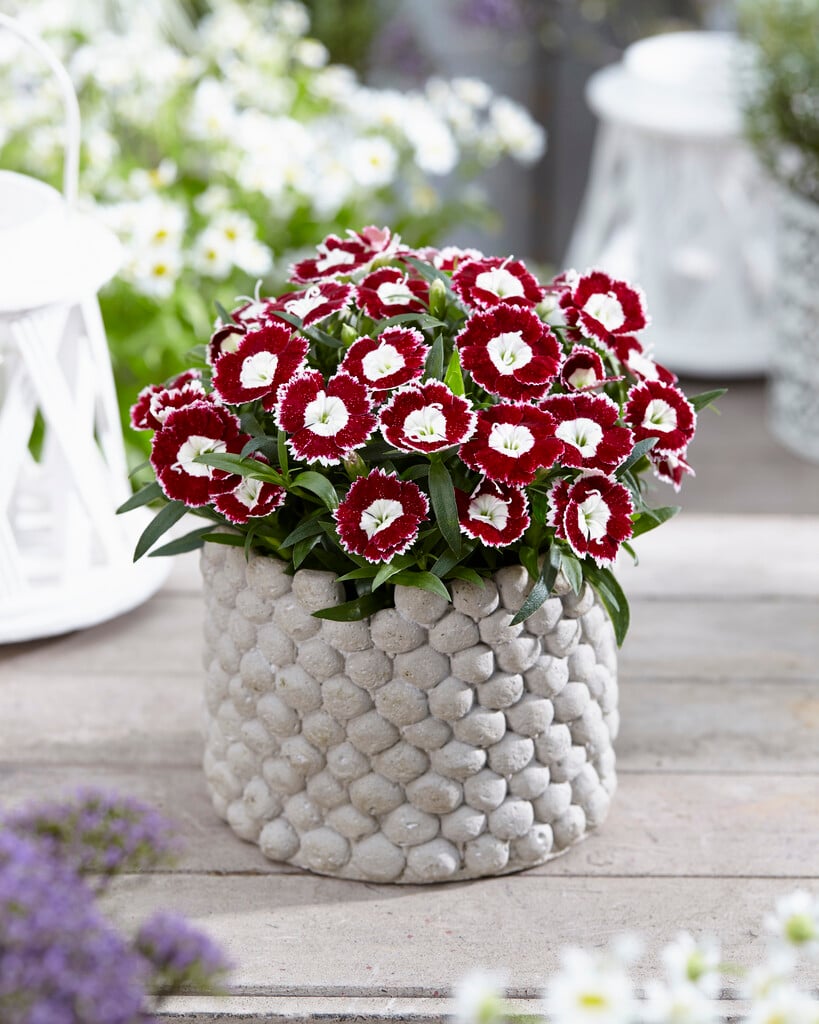
A low-growing, evergreen perennial, to around 15cm high, with narrow, deep green leaves. Produces fragrant, cherry red flowers with white centres and fine white edges, from late spring into summer
Size
Ultimate height
0.1–0.5 metresTime to ultimate height
2–5 yearsUltimate spread
0.1–0.5 metresGrowing conditions
Moisture
Moist but well–drained, Well–drainedpH
Alkaline, NeutralColour & scent
| Stem | Flower | Foliage | Fruit | |
| Spring | Red White | Green | ||
|---|---|---|---|---|
| Summer | Red White | Green | ||
| Autumn | Green | |||
| Winter | Green |
Position
- Full sun
Aspect
South–facing or West–facing
Exposure
Sheltered Hardiness
H6Botanical details
- Family
- Caryophyllaceae
- Native to GB / Ireland
- No
- Foliage
- Evergreen
- Habit
- Matforming
- Potentially harmful
- Humans/Pets: Skin allergen, wear gloves and other protective equipment when handling. For further information and contact numbers regarding pets, see the HTA guide to potentially harmful plants
- Genus
Dianthus can be annuals, evergreen perennials or subshrubs with narrow, often greyish leaves and showy flowers that are frequently fragrant
- Name status
Trade
How to grow
Cultivation
Grow in fertile, well-drained soil in full sun; do not allow plants to dry out
Propagation
Propagate by seed, or by softwood cuttings from non-flowering shoots in summer
Suggested planting locations and garden types
- City and courtyard gardens
- Cottage and informal garden
- Gravel garden
- Patio and container plants
- Rock garden
- Banks and slopes
- Garden edging
Pruning
Deadhead regularly to maintain shape and promote flowering
Pests
Diseases
May be susceptible to powdery mildews, a rust, a virus and fusarium wilt
Get involved
The RHS is the UK’s gardening charity, helping people and plants to grow - nurturing a healthier, happier world, one person and one plant at a time.