Size
Ultimate height
0.5–1 metresTime to ultimate height
5–10 yearsUltimate spread
0.5–1 metresGrowing conditions
Moisture
Moist but well–drainedpH
Acid, Alkaline, NeutralColour & scent
| Stem | Flower | Foliage | Fruit | |
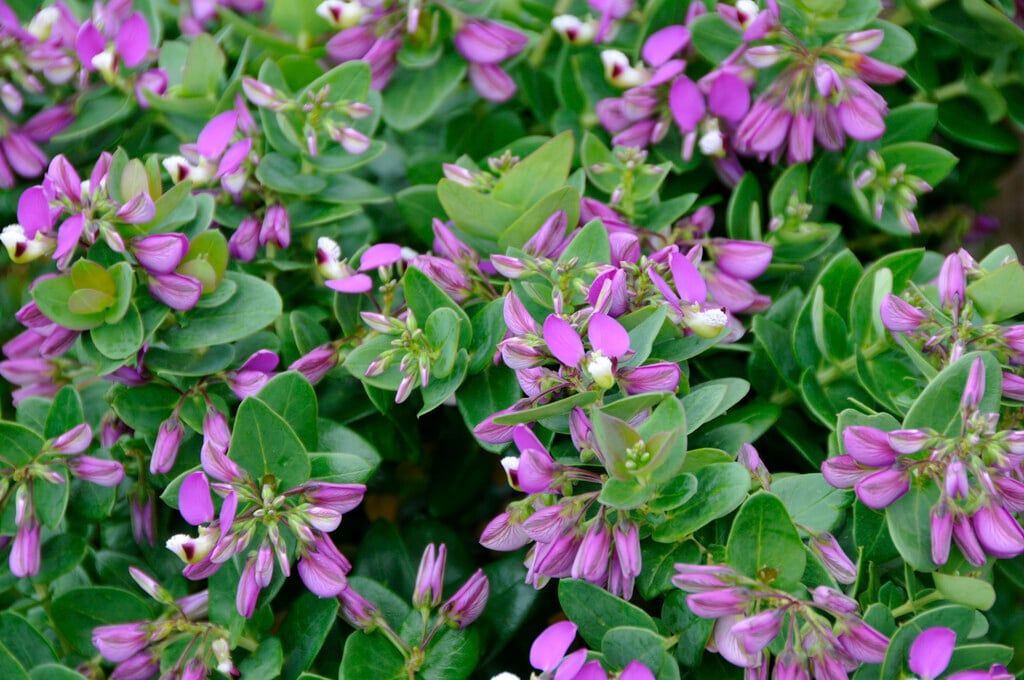
| Spring | Pink Purple | Green | ||
|---|---|---|---|---|
| Summer | Pink Purple | Green | ||
| Autumn | Green | |||
| Winter | Green |
Position
- Full sun
Aspect
South–facing or West–facing
Exposure
Sheltered Hardiness
H2Botanical details
- Family
- Polygalaceae
- Native to GB / Ireland
- No
- Foliage
- Evergreen
- Habit
- Bushy
- Genus
Polygala can be annuals, evergreen perennials or shrubs, with simple leaves and racemes of somewhat pea-shaped flowers
- Name status
Unresolved
How to grow
Cultivation
Grow in a large pot or container in moist but well-drained, humus-rich peat-free compost in a bright greenhouse or conservatory. May be moved outside to a sunny location in summer. Protect from frost
Propagation
Propagate by seed by collecting the seed from mature seed pods in late summer. Propagate by softwood cuttings in early summer or semi-ripe cuttings in mid to late summer
Suggested planting locations and garden types
- City and courtyard gardens
- Cottage and informal garden
- Flower borders and beds
Pruning
Prune after flowering to maintain shape encourage new growth. May be trimmed lightly all year round Remove dead or damaged branches
Pests
May be susceptible to glasshouse whitefly, glasshouse red spider mite and aphids
Diseases
Generally disease-free
Get involved
The Royal Horticultural Society is the UK’s leading gardening charity. We aim to enrich everyone’s life through plants, and make the UK a greener and more beautiful place.
