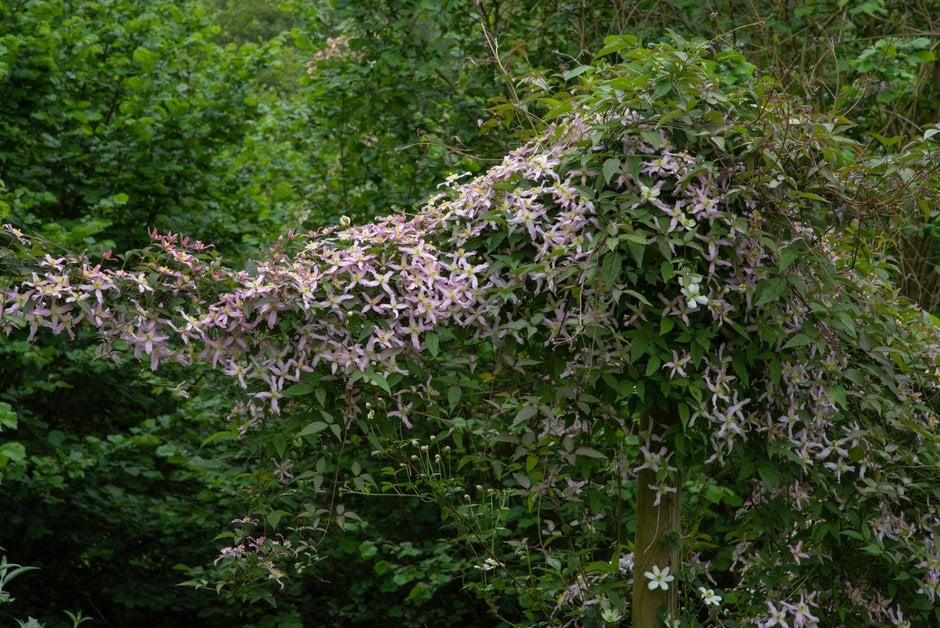
Clematis 'Marilyn' (M)

RHS Plant Profile
clematis 'Marilyn'
clematis 'Marilyn' RHS
Climber Wall Shrub

A vigorous, fast-growing climber with stems up to 9m long and trifoliate leaves. Mauve-pink flowers with long, narrow tepals and a paler central bar open from early to late summer and are followed by persistent fluffy seedheads in autumn

Position

Full sun, Partial shade

Soil Types

Chalk, Clay, Loam, Sand

Max Height

4-8 metres

Max Spread

2.5-4 metres

Size

Time to Maturity
2–5 years
Max Spread
2.5-4 metres
Max Height
4-8 metres

Growing Conditions

Chalk Clay Loam Sand
Moisture
Moist but well–drained
pH
Acid or Alkaline or Neutral

Position

Full sun Partial shade
Aspect
North–facing or West–facing or East–facing or South–facing
Exposure
Exposed or Sheltered
Hardiness
H5

Colour & Scent

Season Stem Flower Foliage Fruit
Spring
Summer
Autumn
Winter

Botanical Details

Family
Ranunculaceae
Native to GB/Ireland
No
Foliage
Deciduous
Habit
Climbing
Potentially harmful
Skin irritant. Wear gloves and other protective equipment when handling. Pets (rabbits): Harmful if eaten. For further information and contact numbers regarding pets, see the HTA guide to potentially harmful plants
Genus
Clematis can be deciduous or evergreen shrubs or herbaceous perennials, mostly climbing by twining leaf-stalks, and often with showy flowers. Some have attractive fluffy seedheads in autumn
Name Status
Accepted
Horticultural Group
Montana Group clematis are vigorous deciduous climbers with single, 4-petalled flowers opening in late spring and early summer

How to Grow

Cultivation

Grow in full sun or partial shade in cool, moisture-retentive, well-drained soil, with the crown 5-8cm deep to encourage new shoots to grow from below ground level; keep the base of the plant and the roots cool and shaded by other plants or a layer of pebbles or flat stones; for more advice, see clematis cultivation

Propagation

Propagate by internodal leaf-bud semi-ripe cuttings taken from spring to late summer, or by layering from late winter to spring

Suggested planting locations and garden types

  • Cottage and informal garden
  • City and courtyard gardens
  • Hedging and screens
  • Wall side borders

Pests

May be susceptible to aphids, snails and caterpillars; petals may be eaten by earwigs

Diseases

May be susceptible to honey fungus (rarely), clematis wilt and clematis slime flux