Chrysosplenium alternifolium
alternate-leaved golden saxifrage
A native plant found mostly in the north and west, growing to about 20cm tall and creeping via stolons to form loose mats with shiny, rounded, alternate leaves. Tiny yellow flowers, surrounded by yellowish leaves, appear in flattened clusters over several months from early spring
Other common names
eglyn cylchddail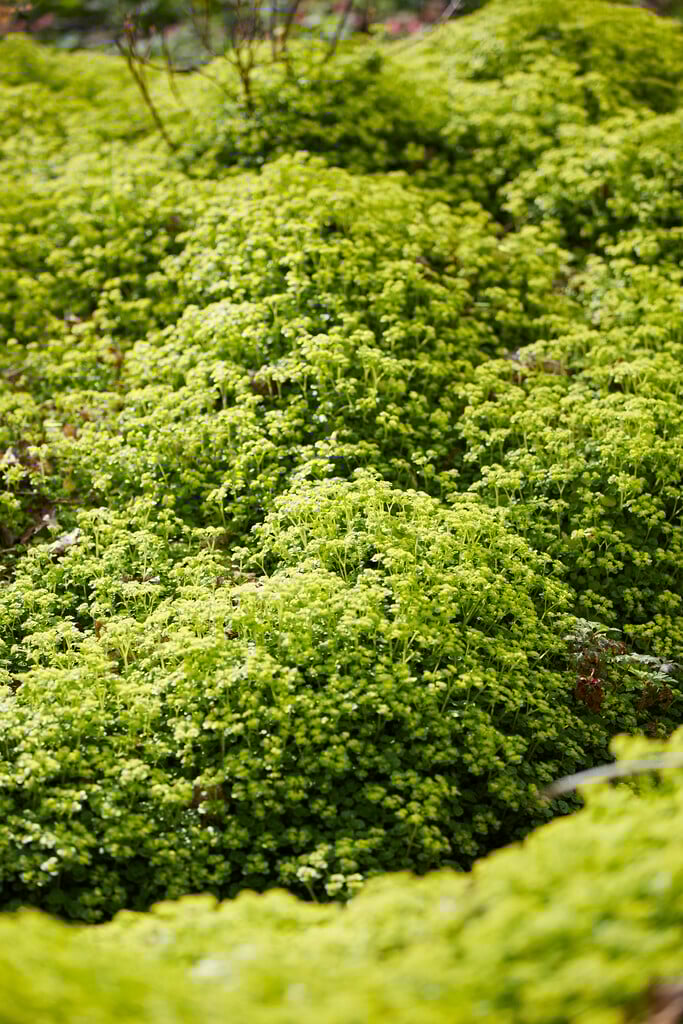
Size
Ultimate height
0.1–0.5 metresTime to ultimate height
2–5 yearsUltimate spread
0.1–0.5 metresGrowing conditions
Moisture
Poorly–drainedpH
Alkaline, NeutralColour & scent
| Stem | Flower | Foliage | Fruit | |
| Spring | Yellow | Green | ||
|---|---|---|---|---|
| Summer | Yellow | Green | ||
| Autumn | Green | |||
| Winter |
Position
- Full shade
- Partial shade
Aspect
East–facing or North–facing
Exposure
Sheltered Hardiness
H5Botanical details
- Family
- Saxifragaceae
- Native to GB / Ireland
- Yes
- Foliage
- Deciduous
- Habit
- Matforming
- Genus
Chrysosplenium are small, sometimes stoloniferous, shade-loving perennials with long-stalked, rounded or kidney-shaped leaves and small yellow, green, white, or purple flowers in terminal bracted clusters
- Name status
Correct
- Plant range
- Europe, Siberia
How to grow
Cultivation
Grows naturally in damp, shady places such as streamsides, wet rocky ledges and boggy woods. Needs permanently wet, neutral to alkaline soil in a mostly shaded spot
Propagation
Propagate by seed or by division
Suggested planting locations and garden types
- Wildlife gardens
Pruning
No pruning required
Pests
Generally pest-free
Diseases
May be susceptible to a rust
Get involved
The Royal Horticultural Society is the UK’s leading gardening charity. We aim to enrich everyone’s life through plants, and make the UK a greener and more beautiful place.