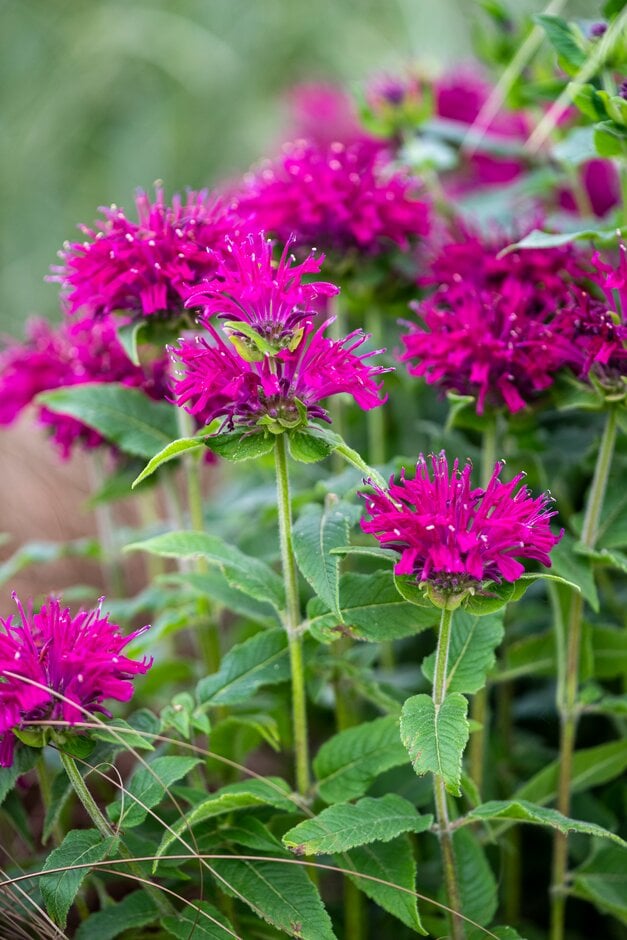
Monarda didyma 'Grape Gumball'PBR (Sugar Buzz Series)

RHS Plant Profile
bergamot 'Grape Gumball'
bergamot 'Grape Gumball' RHS / Joanna Kossak
Plants for pollinators
Herbaceous Perennial Herbs - Culinary

A vigorous, clump-forming perennial with aromatic dark green leaves and strong upright stems producing globe-shaped clusters of magenta purple flowers throughout the summer. The leaves have a minty fragrance when crushed and can be used to make tea. Good resistance to powdery mildews

Position

Full sun, Partial shade

Soil Types

Loam

Max Height

0.5-1 metres

Max Spread

0.5-1 metres

Size

Time to Maturity
2–5 years
Max Spread
0.5-1 metres
Max Height
0.5-1 metres

Growing Conditions

Loam
Moisture
Moist but well–drained
pH
Acid or Alkaline or Neutral

Position

Full sun Partial shade
Aspect
East–facing or South–facing or West–facing
Exposure
Exposed or Sheltered
Hardiness
H5

Colour & Scent

Fragrance Foliage
Season Stem Flower Foliage Fruit
Spring
Summer
Autumn
Winter

Botanical Details

Family
Lamiaceae
Native to GB/Ireland
No
Foliage
Deciduous
Habit
Clump forming
Genus
Monarda can be annuals or clump-forming herbaceous perennials with aromatic, ovate leaves and terminal whorls of 2-lipped, tubular flowers from summer to early autumn
Name Status
Accepted

How to Grow

Cultivation

Grow in fertile, humus-rich, moisture-retentive but well-drained soil in full sun or partial shade. Protect from excessive winter wet and do not allow soil to dry out in summer

Propagation

Propagate by division in spring, before new growth begins, or by basal softwood cuttings in spring

Suggested planting locations and garden types

  • City and courtyard gardens
  • Cottage and informal garden
  • Prairie planting
  • Wildlife gardens
  • Flower borders and beds

Pruning

No pruning required, though deadheading may prolong flowering

Pests

May be susceptible to slugs, especially in the spring

Diseases

May be susceptible to powdery mildews, especially in hot, dry summers; This variety is said to be more mildew-resistant