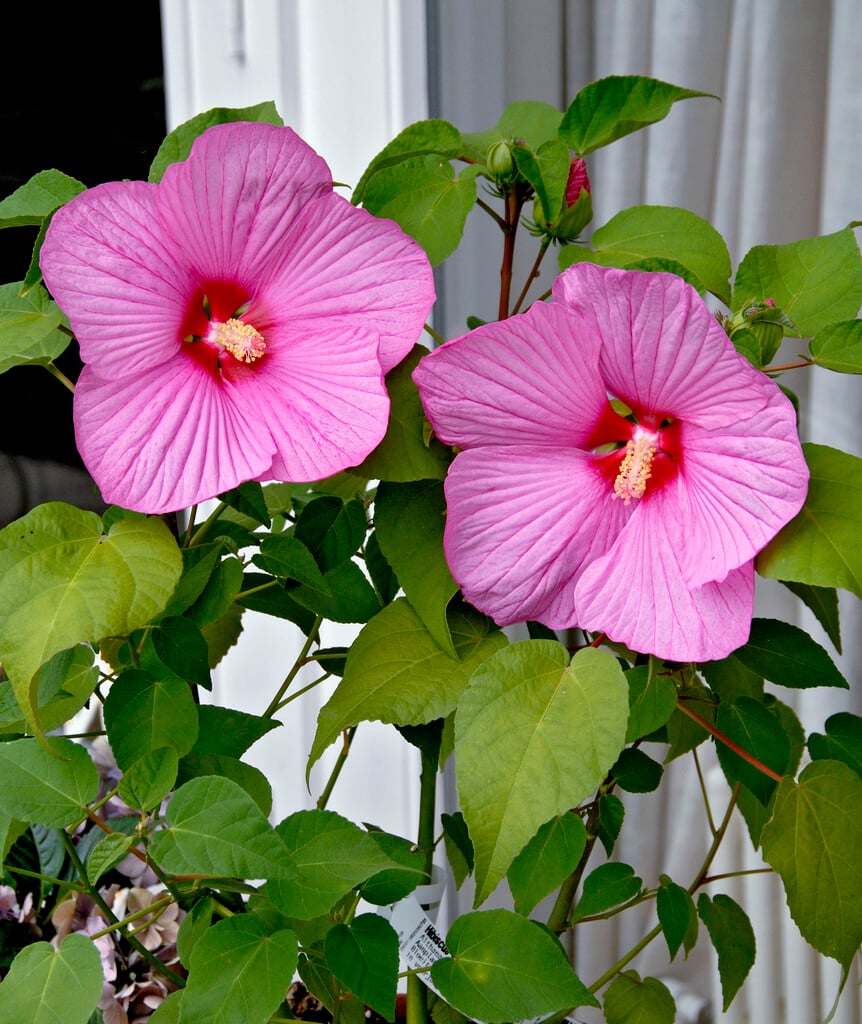
Hibiscus syriacus

RHS Plant Profile
rose of Sharon

Other common names

althaea frutex, shrubby althaea, Syrian hibiscus, Syrian mallow

Synonyms

Althaea syriaca hort.

Shrubs

A medium to large, deciduous shrub up to 4m tall with an upright habit. Lobed leaves appear in late spring and large, trumpet-shaped flowers in shades of pink, red, blue and white with conspicuous protruding tubes of stamens open in succession from midsummer into autumn

Position

Full sun

Soil Types

Chalk, Clay, Loam, Sand

Max Height

2.5-4 metres

Max Spread

2.5-4 metres

Size

Time to Maturity
10–20 years
Max Spread
2.5-4 metres
Max Height
2.5-4 metres

Growing Conditions

Chalk Clay Loam Sand
Moisture
Moist but well–drained or Well–drained
pH
Acid or Neutral

Position

Full sun
Aspect
South–facing or West–facing
Exposure
Sheltered
Hardiness
H5

Colour & Scent

Season Stem Flower Foliage Fruit
Spring
Summer
Autumn
Winter

Botanical Details

Family
Malvaceae
Native to GB/Ireland
No
Foliage
Deciduous
Habit
Bushy, Columnar upright
Genus
Hibiscus can be deciduous or evergreen shrubs, trees, annuals or perennials, with simple or palmately lobed leaves and large, funnel-shaped flowers over a long flowering season
Name Status
Correct
Plant Range
E Asia

How to Grow

Cultivation

Grow in a moist but well-drained soil in a sheltered position in full sun

Propagation

Propagate by semi-hardwood cuttings

Suggested planting locations and garden types

  • City and courtyard gardens
  • Coastal
  • Cottage and informal garden
  • Flower borders and beds
  • Wall side borders
  • Hedging and screens

Pruning

Pruning group 1

Pests

May be susceptible to aphids, scale insects, mealybugs and glasshouse whitefly when grown under glass

Diseases

May be susceptible to honey fungus (rarely) and powdery mildews