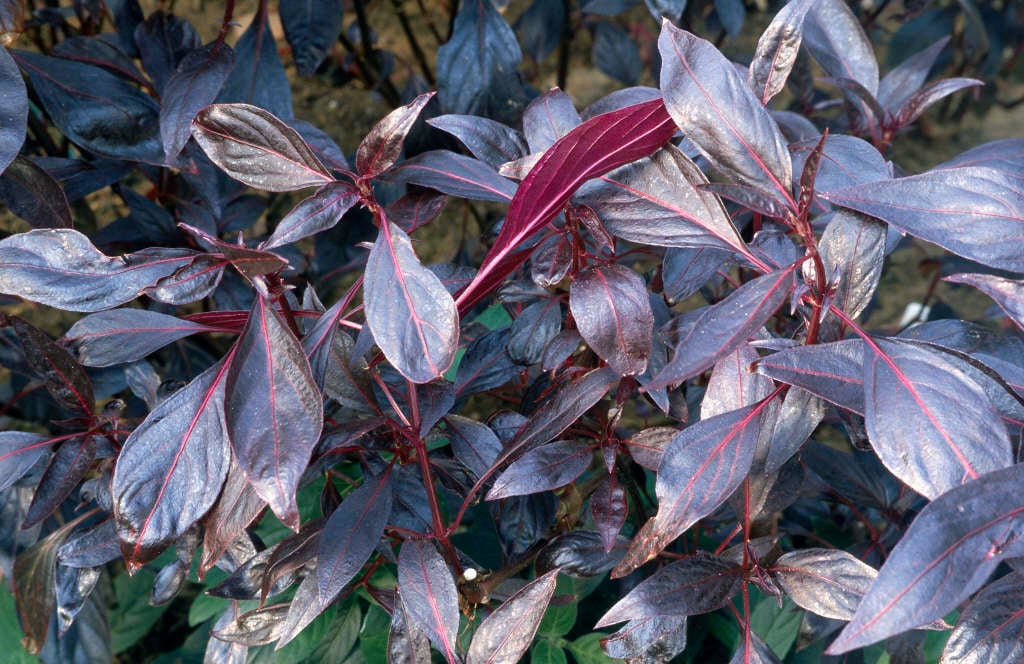
Iresine lindenii

RHS Plant Profile
blood leaf
blood leaf RHS 2003
Conservatory Greenhouse

A bushy evergreen perennial to 90cm in height, with ovate to lance-shaped, blood-red leaves prominently veined with lighter or darker red

Position

Full sun

Soil Types

Chalk, Clay, Loam, Sand

Max Height

0.5-1 metres

Max Spread

0.5-1 metres

Size

Time to Maturity
2–5 years
Max Spread
0.5-1 metres
Max Height
0.5-1 metres

Growing Conditions

Chalk Clay Loam Sand
Moisture
Moist but well–drained or Well–drained
pH
Acid or Alkaline or Neutral

Position

Full sun
Aspect
West–facing or South–facing or East–facing
Exposure
Sheltered
Hardiness
H1C

Colour & Scent

Season Stem Flower Foliage Fruit
Spring
Summer
Autumn
Winter

Botanical Details

Family
Amaranthaceae
Native to GB/Ireland
No
Foliage
Evergreen
Habit
Bushy
Genus
Iresine can be annuals or evergreen perennials with simple, ovate leaves, usually brightly coloured or patterned, with insignificant terminal spikes of whitish flowers in summer
Name Status
Correct
Plant Range
Ecuador

How to Grow

Cultivation

Under glass grow in peat-free, loam-based compost in full light with shade from hot sun. When in growth water freely and apply a balanced liquid fertiliser monthly; keep just moist in winter. Can be grown outdoors during the summer in moderately fertile soil with protection from cold, drying winds

Propagation

Propagate by softwood cuttings in late winter or early spring

Suggested planting locations and garden types

  • Patio and container plants
  • Low Maintenance

Pruning

No pruning required

Pests

May be susceptible to glasshouse whitefly and glasshouse red spider mite

Diseases

May be susceptible to powdery mildews