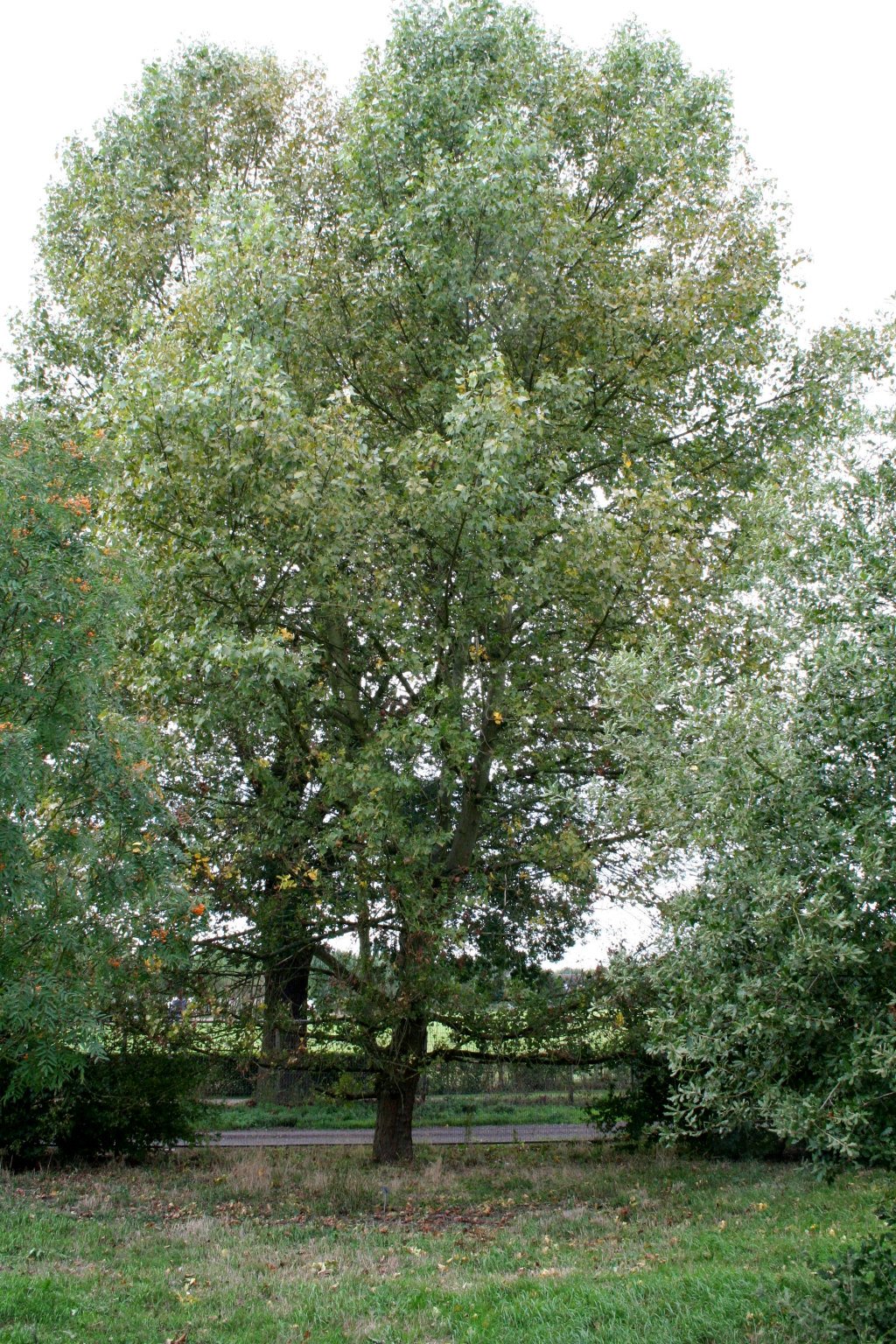
Populus nigra subsp. betulifolia

RHS Plant Profile
Manchester poplar
Manchester poplar RHS

Other common names

downy black poplar

Trees

A bushy deciduous tree to 30m tall, with rough, dark grey bark, downy young shoots, triangular to ovate leaves 10cm long, and red male or green female catkins in early spring

Position

Full sun

Soil Types

Chalk, Clay, Loam

Max Height

Higher than 12 metres

Max Spread

wider than 8 metres

Size

Time to Maturity
20–50 years
Max Spread
wider than 8 metres
Max Height
Higher than 12 metres

Growing Conditions

Chalk Clay Loam
Moisture
Moist but well–drained or Poorly–drained or Well–drained
pH
Acid or Alkaline or Neutral

Position

Full sun
Aspect
South–facing or East–facing or North–facing or West–facing
Exposure
Exposed or Sheltered
Hardiness
H6

Colour & Scent

Season Stem Flower Foliage Fruit
Spring
Summer
Autumn
Winter

Botanical Details

Family
Salicaceae
Native to GB/Ireland
Yes
Foliage
Deciduous
Habit
Bushy
Genus
Populus are deciduous trees, mostly very fast-growing and large, with male and female catkins on separate trees, opening before the leaves. Male catkins are the more ornamental, female ones can be a nuisance from the cottony, wind-blown seeds
Name Status
Correct
Plant Range
Europe

How to Grow

Cultivation

Cultivated for very rapid growth as specimen tree; useful for windbreaks. Tolerant of any soil other than constantly waterlogged soils. Avoid growing within 40m of buildings as the vigorous root system may damage drains and foundations, particularly on clay soils; has the potential to become a nuisance

Propagation

Propagate from hardwood cuttings in winter or suckers in autumn or late winter

Suggested planting locations and garden types

  • Coastal

Pruning

Pruning group 1 in summer to avoid bleeding from pruning cuts. Established trees need little pruning; sucker removal in autumn or winter

Pests

May be susceptible to leaf beetles, sawflies and caterpillars

Diseases

May be susceptible to leaf spots, poplar bacterial canker, tree rusts and honey fungus