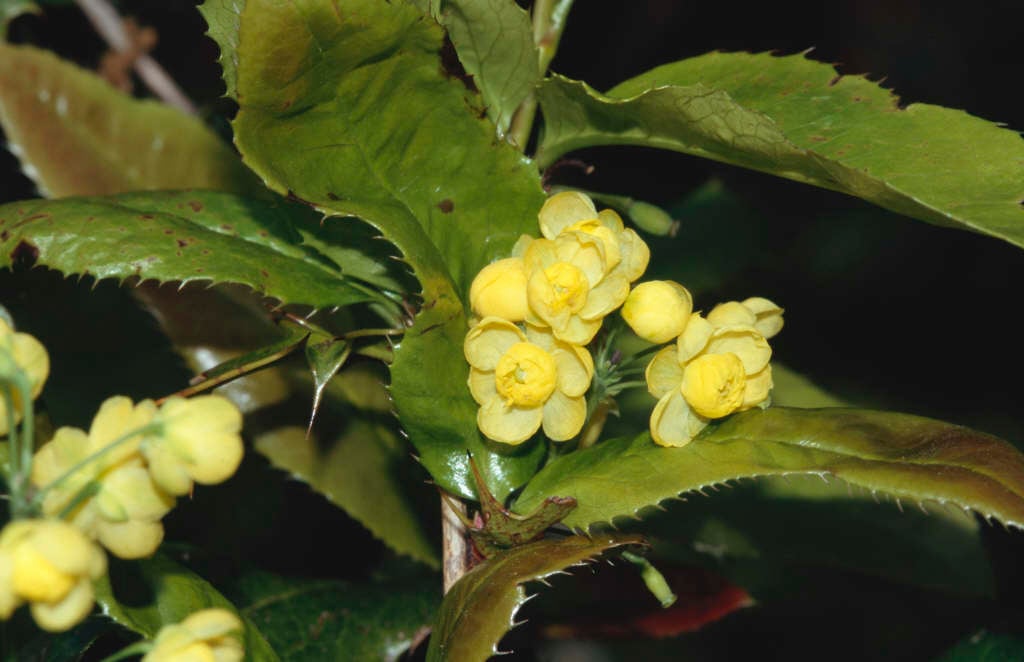
× Mahoberberis aquisargentii

RHS Plant Profile
hybrid mahonia
hybrid mahonia RHS
Shrubs

an upright evergreen shrub with a mixture of simple, thin leaves and more leathery, 3-parted leaves; small clusters of yellow flowers open in early summer sometimes followed by black berries

Position

Full shade, Full sun, Partial shade

Soil Types

Chalk, Clay, Loam, Sand

Max Height

1.5-2.5 metres

Max Spread

1.5-2.5 metres

Size

Time to Maturity
10–20 years
Max Spread
1.5-2.5 metres
Max Height
1.5-2.5 metres

Growing Conditions

Chalk Clay Loam Sand
Moisture
Moist but well–drained or Well–drained
pH
Acid or Alkaline or Neutral

Position

Full shade Full sun Partial shade
Aspect
West–facing or East–facing or South–facing or North–facing
Exposure
Exposed or Sheltered
Hardiness
H5

Colour & Scent

Season Stem Flower Foliage Fruit
Spring
Summer
Autumn
Winter

Botanical Details

Family
Berberidaceae
Native to GB/Ireland
No
Foliage
Evergreen
Habit
Bushy
Potentially harmful
Fruit is ornamentalnot to be eaten. Wear gloves and other protective equipment when handling
Genus
× Mahoberberis are evergreen shrubs representing hybrids between species of Mahonia and Berberis, with variably spiny leaves which ma be simple or pinnate, and small yellow flowers in compact clusters in late spring or early summer
Name Status
Correct

How to Grow

Cultivation

Grow in any soil and in any aspect

Propagation

Propagate by semi-ripe cuttings in late summer or early autumn

Suggested planting locations and garden types

  • Coastal
  • Cottage and informal garden
  • City and courtyard gardens
  • Flower borders and beds
  • Hedging and screens

Pruning

No pruning required, but will withstand being cut back hard for restorative pruning. Remove one or two older branches every few years

Pests

Berberis sawfly may be a problem

Diseases

May be susceptible to powdery mildews and sometimes by honey fungus