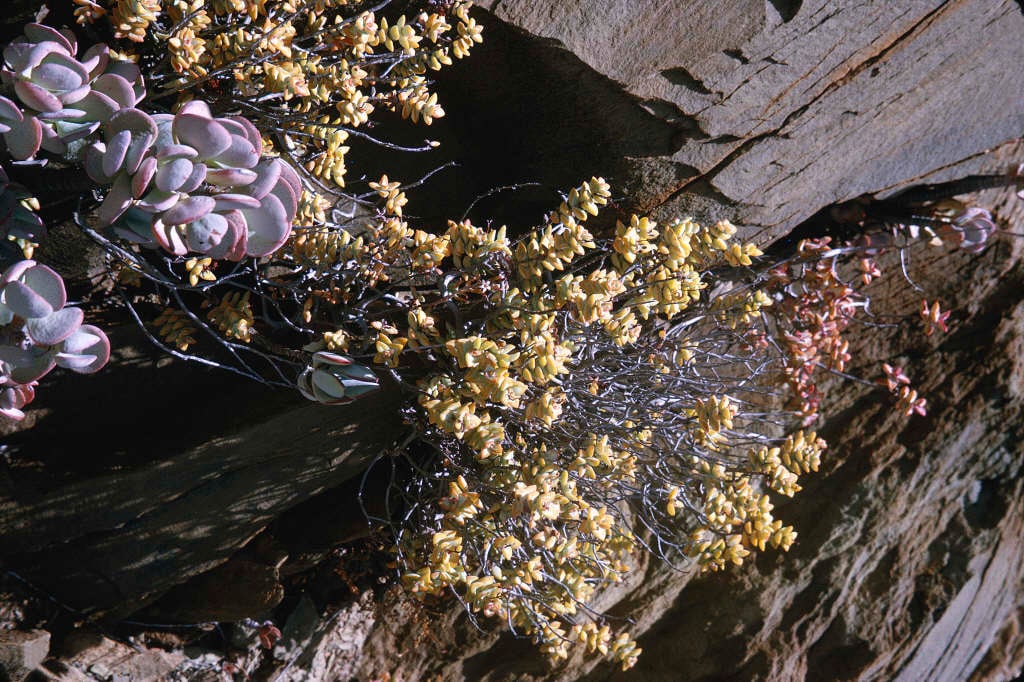
Crassula rupestris

RHS Plant Profile
buttons on a string
buttons on a string RHS 1965

Other common names

bead vine, necklace vine, rosary vine

Award of Garden Merit
Houseplants Cactus Succulent Conservatory Greenhouse

A bushy, spreading evergreen succulent perennial to 45cm in height, with thick, ovate leaves usually edged with red; flowers 6mm across, white or pink, star-shaped, in axillary clusters

Position

Full sun

Soil Types

Loam, Sand

Max Height

0.1-0.5 metres

Max Spread

0.1-0.5 metres

Size

Time to Maturity
5–10 years
Max Spread
0.1-0.5 metres
Max Height
0.1-0.5 metres

Growing Conditions

Loam Sand
Moisture
Well–drained
pH
Acid or Alkaline or Neutral

Position

Full sun
Aspect
North–facing or South–facing or East–facing
Exposure
Sheltered
Hardiness
H2

Colour & Scent

Season Stem Flower Foliage Fruit
Spring
Summer
Autumn
Winter

Botanical Details

Family
Crassulaceae
Native to GB/Ireland
No
Foliage
Evergreen
Habit
Bushy
Genus
Crassula can be succulent annuals, perennials, evergreen shrubs or sub-shrubs, with fleshy leaves and small, star-shaped or funnel-shaped flowers in a terminal cluster
Name Status
Correct
Plant Range
S Africa, Namibia

How to Grow

Cultivation

Grow under glass in a standard cactus compost, in bright, filtered light or full sun. When in growth feed every two or three weeks with a balanced liquid feed. Water moderately from spring to autumn, sparingly at other times. See houseplant cacti and succulent cultivation for further information

Propagation

Propagate by seed sown at 15 - 18°C in early spring or stem or leaf cuttings in spring or early summer

Suggested planting locations and garden types

  • Patio and container plants

Pruning

No pruning required

Pests

May be susceptible to mealybugs, vine weevil and aphids

Diseases

Generally disease-free