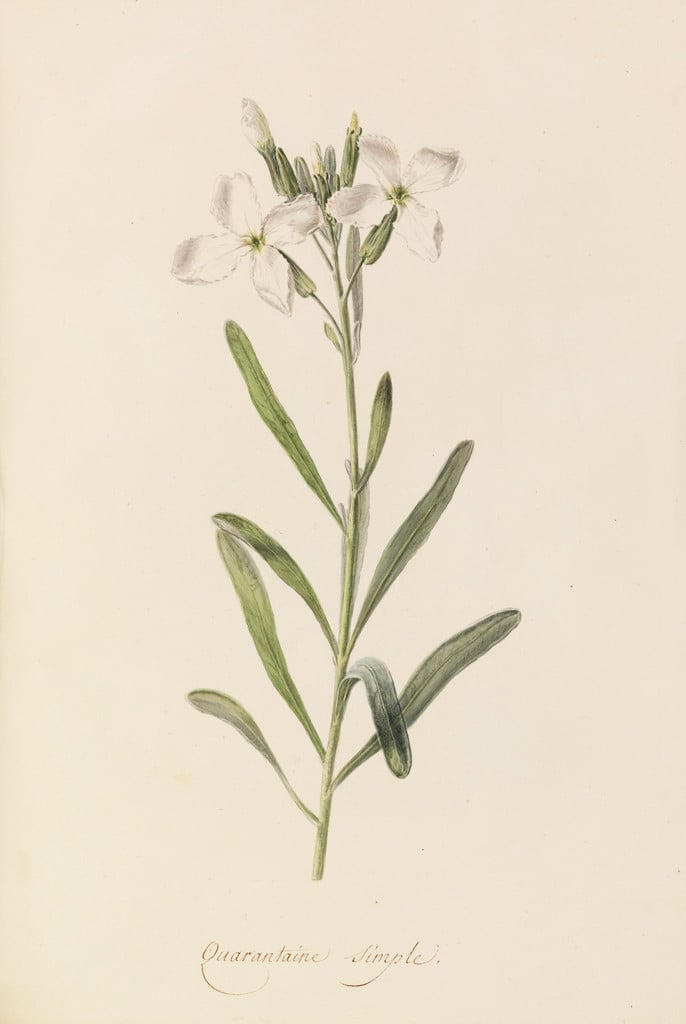
Matthiola incana

RHS Plant Profile
Brompton stock
Brompton stock RHS

Other common names

cluster-leaved stock, common stock, hoary stock, hopes, queen's stock, wallflower stock, gilliflower

Synonyms

Matthiola incana 'Brompton'
Matthiola arborescens

Plants for pollinators
Herbaceous Perennial

A woody-based perennial, sometimes short-lived, with narrow, grey-green foliage. Upright spikes of sweet-scented pink, mauve, purple, violet or white flowers, up to 2.5cm across, are produced in late spring and early summer. Many cultivars of this species are grown as annual or biennial bedding plants, or for cut flowers

Position

Full sun

Soil Types

Chalk, Loam, Sand

Max Height

0.5-1 metres

Max Spread

0.1-0.5 metres

Size

Time to Maturity
2–5 years
Max Spread
0.1-0.5 metres
Max Height
0.5-1 metres

Growing Conditions

Chalk Loam Sand
Moisture
Moist but well–drained
pH
Alkaline or Neutral

Position

Full sun
Aspect
West–facing or South–facing
Exposure
Sheltered
Hardiness
H4

Colour & Scent

Fragrance Flower
Season Stem Flower Foliage Fruit
Spring
Summer
Autumn
Winter

Botanical Details

Family
Brassicaceae
Native to GB/Ireland
No
Foliage
Deciduous
Habit
Bushy
Genus
Matthiola can be annuals, perennials or subshrubs, with simple or lobed leaves and dense terminal racemes or panicles of fragrant, 4-petalled flowers
Name Status
Correct

How to Grow

Cultivation

Grow in a sunny, sheltered bed where the soil is well-drained and neutral to slightly alkaline

Propagation

Propagate by seed sown in gentle heat in early spring or sow in midsummer and protect young plants over winter

Suggested planting locations and garden types

  • City and courtyard gardens
  • Cottage and informal garden
  • Patio and container plants
  • Wildlife gardens
  • Cut flowers
  • Flower borders and beds

Pruning

Cut back after flowering

Pests

Susceptible to aphids, flea beetles and cabbage root fly

Diseases

May be susceptible to club root, downy mildews, root rot and a virus