Narcissus 'Niveth' (5)
daffodil 'Niveth'
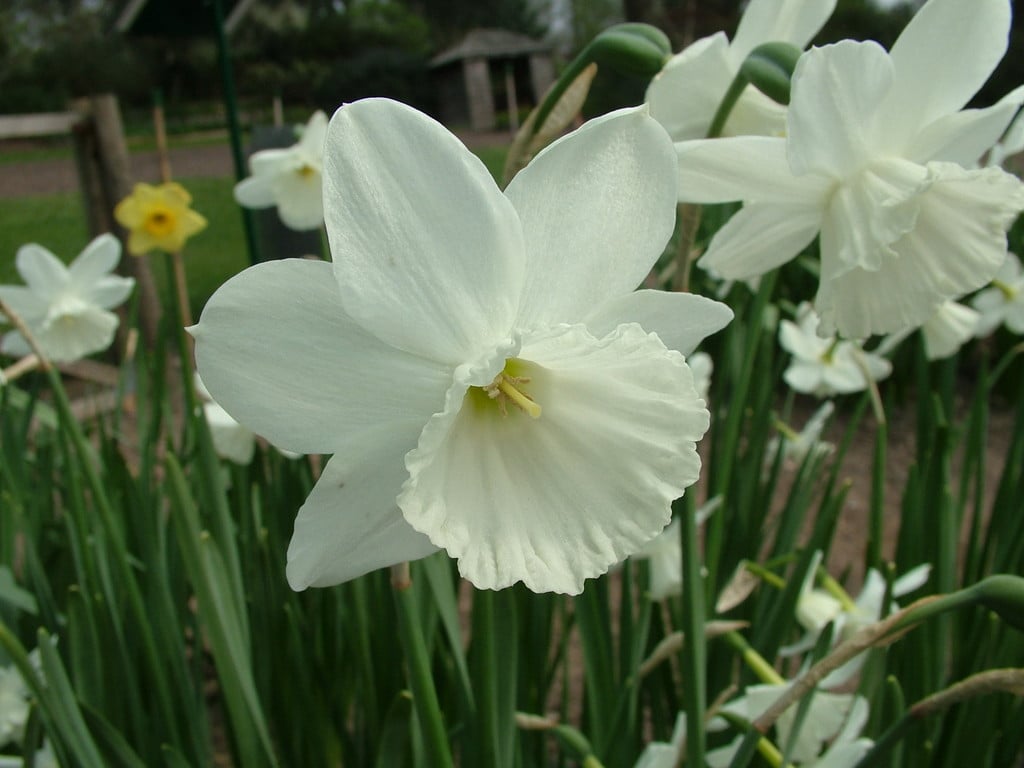
'Niveth' is a bulbous perennial to 50cm tall flowering in mid to late spring. Pleasantly-fragrant, glistening white, downward-facing flowers to 7.5cm across, usually two per stem, with broadly ovate, lightly reflexed and overlapping perianth segments
Size
Ultimate height
0.1–0.5 metresTime to ultimate height
2–5 yearsUltimate spread
0.1–0.5 metresGrowing conditions
Moisture
Moist but well–drainedpH
Acid, Alkaline, NeutralColour & scent
| Stem | Flower | Foliage | Fruit | |
| Spring | White | Green | ||
|---|---|---|---|---|
| Summer | ||||
| Autumn | ||||
| Winter |
Position
- Full sun
- Partial shade
Aspect
South–facing or East–facing or North–facing or West–facing
Exposure
Exposed or Sheltered Hardiness
H6Botanical details
- Family
- Amaryllidaceae
- Native to GB / Ireland
- No
- Foliage
- Deciduous
- Habit
- Clump forming
- Potentially harmful
- Harmful if eaten, skin irritant. Wear gloves and other protective equipment when handling. Pets (dogs, cats, tortoises): Harmful if eaten, skin irritant. For further information and contact numbers regarding pets, see the HTA guide to potentially harmful plants
- Genus
Narcissus are bulbous herbaceous perennials with linear leaves and leafless stems bearing flowers, which may be solitary or in umbels, with 6 spreading perianth segments and a cup or trumpet-shaped corona
- Name status
Accepted
- Horticultural Group
- Triandrus daffodils are small, mostly less than 50cm tall, with up to 6 more or less nodding flowers per stem, each with a short cup and usually reflexed perianth segments
How to grow
Cultivation
Plant bulbs at one-and-a-half times their own depth in autumn, slightly deeper in light soils and in grass, in well-drained soil that is moist in the growing season in spring, in full sun or light dappled shade. See daffodil cultivation for further advice
Propagation
Propagate by division: separate and replant offsets as the leaves fade in early summer, or in early autumn before new roots are produced
Suggested planting locations and garden types
- Coastal
- Patio and container plants
- City and courtyard gardens
- Cottage and informal garden
- Low Maintenance
- Banks and slopes
- Cut flowers
- Flower borders and beds
- Underplanting of roses and shrubs
Pruning
Deadhead as the flowers fade but allow the leaves to die down naturally
Pests
May be susceptible to slugs, narcissus bulb fly, narcissus eelworm, and bulb scale mite
Diseases
May be susceptible to narcissus basal rot, narcissus leaf scorch or daffodil viruses
Get involved
The Royal Horticultural Society is the UK’s leading gardening charity. We aim to enrich everyone’s life through plants, and make the UK a greener and more beautiful place.