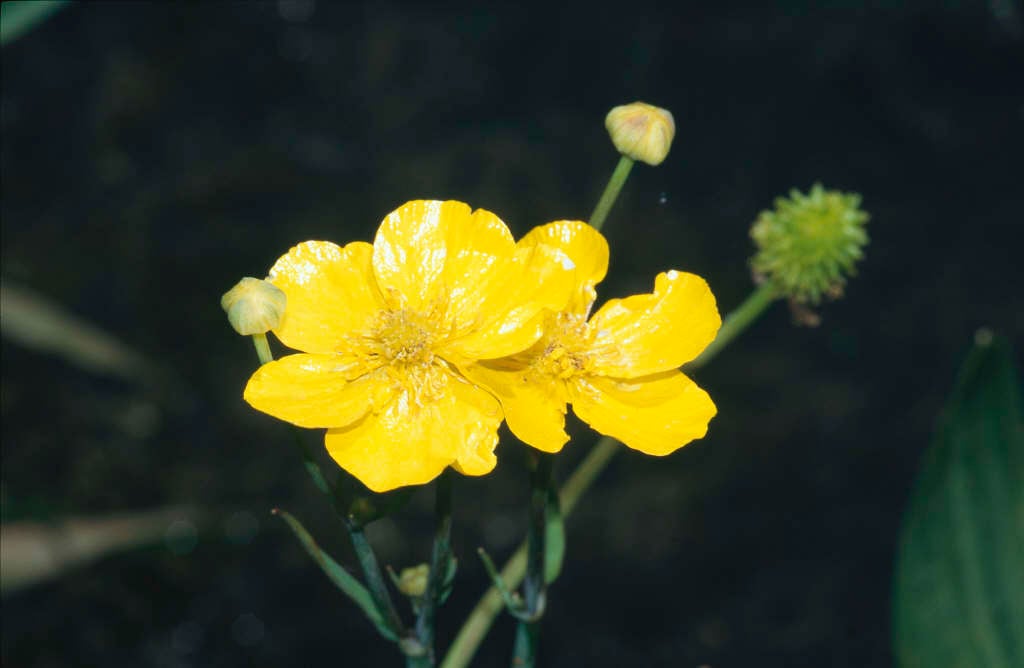
Ranunculus lingua 'Grandiflorus'

RHS Plant Profile
large-flowered greater spearwort
large-flowered greater spearwort RHS 2002
Plants for pollinators
Aquatic Bogs Herbaceous Perennial

An erect marginal aquatic perennial with simple, lance-shaped blue-green leaves and bowl-shaped yellow flowers 6cm across borne on branched stems in early summer

Position

Full sun

Soil Types

Clay, Loam

Max Height

1-1.5 metres

Max Spread

0.5-1 metres

Size

Time to Maturity
2–5 years
Max Spread
0.5-1 metres
Max Height
1-1.5 metres

Growing Conditions

Clay Loam
Moisture
Poorly–drained
pH
Acid or Alkaline or Neutral

Position

Full sun
Aspect
South–facing or West–facing
Exposure
Exposed or Sheltered
Hardiness
H7

Colour & Scent

Season Stem Flower Foliage Fruit
Spring
Summer
Autumn
Winter

Botanical Details

Family
Ranunculaceae
Native to GB/Ireland
No
Foliage
Deciduous
Habit
Clump forming
Potentially harmful
Harmful if eatenskin irritant. Wear gloves and other protective equipment when handling. Pets: Harmful if eatenskin irritant - for further information and contact numbers regarding pets, see the HTA guide to potentially harmful plants
Genus
Ranunculus can be annuals, biennials, evergreen or herbaceous perennials, with rhizomes, tubers or spreading by runners. The leaves are variable but often palmately lobed or dissected and the flowers usually bowl-shaped
Name Status
Accepted

How to Grow

Cultivation

Grow in muddy pool margins in water 15-25cm deep, in full sun. Will grow in still or slow moving water. See pond plants and bog gardens for further advice

Propagation

Propagate by division in spring or autumn

Suggested planting locations and garden types

  • Wildlife gardens
  • Low Maintenance

Pruning

Cut back after flowering

Pests

Generally pest-free

Diseases

May be susceptible to powdery mildews, a rust and grey moulds
