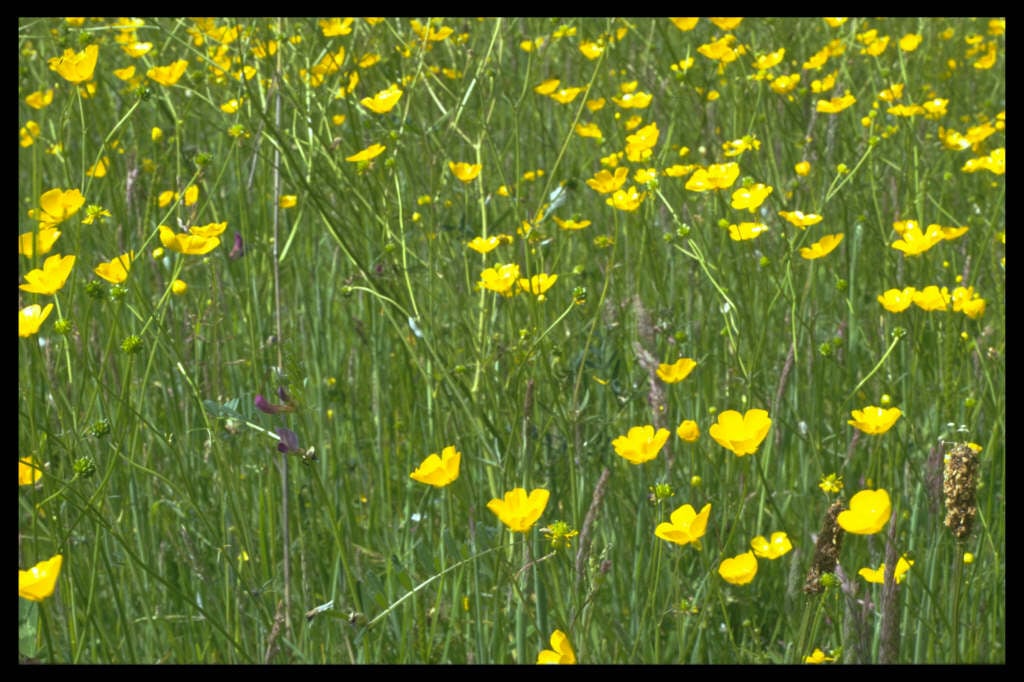
Ranunculus acris

RHS Plant Profile
meadow buttercup
meadow buttercup Mike L. Grant 1993

Other common names

blister plant, blisterflower, blisterwort, butter cress, butter daisy, butter rose, common buttercup, common crowflower, common crowfoot, gold balls, gold knobs, gold knots, goldweed, horse gold, meadow crowfoot, meadow cup, meadow ranunculus, upright crowfoot, water milfoil, cuckooflower, yellow gowan, blodyn ymenyn

Synonyms

Ranunculus silvaticus

Plants for pollinators
Herbaceous Perennial

A hairy, upright, fibrous-rooted perennial from 20-90cm tall, with long-stalked, palmately divided, mid-green leaves and open panicles of bright glossy golden yellow, bowl-shaped flowers 2.5cm across, in early and midsummer

Position

Full sun, Partial shade

Soil Types

Chalk, Clay, Loam, Sand

Max Height

0.5-1 metres

Max Spread

0.1-0.5 metres

Size

Time to Maturity
2–5 years
Max Spread
0.1-0.5 metres
Max Height
0.5-1 metres

Growing Conditions

Chalk Clay Loam Sand
Moisture
Moist but well–drained
pH
Acid or Alkaline or Neutral

Position

Full sun Partial shade
Aspect
South–facing or East–facing or West–facing
Exposure
Exposed or Sheltered
Hardiness
H7

Colour & Scent

Season Stem Flower Foliage Fruit
Spring
Summer
Autumn
Winter

Botanical Details

Family
Ranunculaceae
Native to GB/Ireland
Yes
Foliage
Deciduous
Habit
Clump forming
Potentially harmful
Harmful if eatenskin irritant. Wear gloves and other protective equipment when handling. Pets: Harmful if eatenskin irritant - for further information and contact numbers regarding pets, see the HTA guide to potentially harmful plants
Genus
Ranunculus can be annuals, biennials, evergreen or herbaceous perennials, with rhizomes, tubers or spreading by runners. The leaves are variable but often palmately lobed or dissected and the flowers usually bowl-shaped
Name Status
Correct
Plant Range
Europe, Asia

How to Grow

Cultivation

Grow in humus-rich, fertile, moist or moist but well-drained soil in full sun or partial shade

Propagation

Propagate by seed or division

Suggested planting locations and garden types

  • Wildlife gardens
  • Wildflower meadow

Pruning

No pruning required

Pests

Generally pest-free

Diseases

May be susceptible to powdery mildews, a rust and grey moulds