Persicaria filiformis 'Compton's Red'
Virginia knotweed 'Compton's Red'
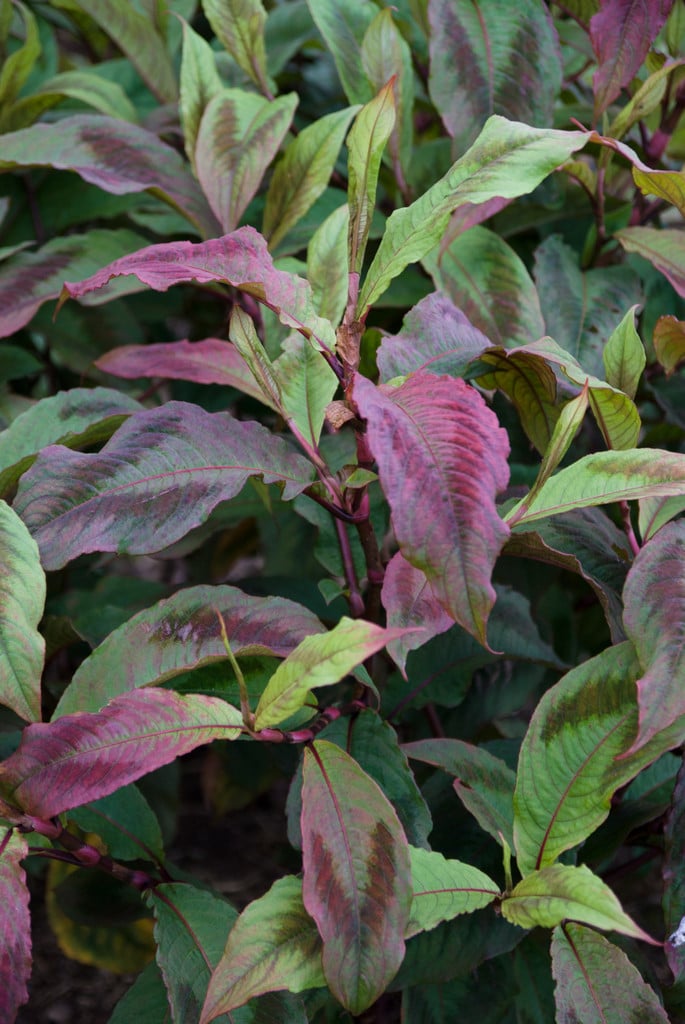
A clump-forming, deciduous herbaceous perennial to 80cm with chunky, ovate to elliptic olive-green leaves, with a chocolate-brown chevron, red veins and red flush. Spikes of red flowers appear in late summer and early autumn. Suitable for the middle of a flower border. Copes well in dry shade
Size
Ultimate height
0.5–1 metresTime to ultimate height
2–5 yearsUltimate spread
0.5–1 metresGrowing conditions
Moisture
Moist but well–drainedpH
Acid, Alkaline, NeutralColour & scent
| Stem | Flower | Foliage | Fruit | |
| Spring | Green Brown Red | |||
|---|---|---|---|---|
| Summer | Red | Green Brown Red | ||
| Autumn | Red | Green Brown Red | ||
| Winter |
Position
- Full sun
- Partial shade
Aspect
East–facing or North–facing or South–facing or West–facing
Exposure
Exposed or Sheltered Hardiness
H6Botanical details
- Family
- Polygonaceae
- Native to GB / Ireland
- No
- Foliage
- Deciduous
- Habit
- Clump forming
- Genus
Persicaria can be annuals, herbaceous or evergreen perennials or sub-shrubs with simple leaves and small bell-shaped white or pink flowers in long-lasting spikes or panicles
- Name status
Accepted
How to grow
Cultivation
Grow in moisture-retentive but well-drained soil in sun or partial shade. Robust in dry shade See https://www.rhs.org.uk/plants/trials-awards for further information about RHS plant trials and awards
Propagation
Propagate by division in spring or autumn
Suggested planting locations and garden types
- City and courtyard gardens
- Cottage and informal garden
- Flower borders and beds
Pruning
Cut back old, flowered stems to the ground in autumn
Pests
Generally pest-free but may be susceptible to slugs and snails
Diseases
Generally disease-free
Get involved
The RHS is the UK’s gardening charity, helping people and plants to grow - nurturing a healthier, happier world, one person and one plant at a time.