Crataegus × media 'Crimson Cloud'
hawthorn 'Crimson Cloud'
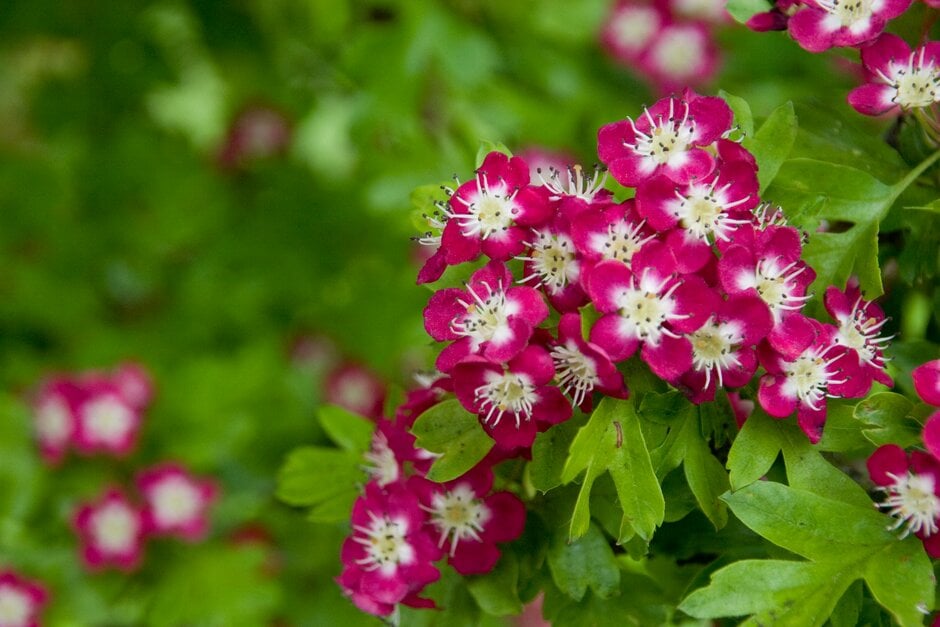
A small, thorny, deciduous tree, up to 5m in height, with glossy green, deeply lobed leaves which turn yellow and bronze in the autumn. Single, pinkish-red flowers with white centres appear in spring, followed by dark red fruit in early autumn. A great tree to attract wildlife, and performs well in a range of garden soils and locations
Synonyms
Crataegus × media 'Superba'Crataegus laevigata 'Crimson Cloud'
see moreCrataegus × media 'Punicea' misapplied
Buy this plant
Size
Ultimate height
4–8 metresTime to ultimate height
10–20 yearsUltimate spread
2.5–4 metresGrowing conditions
Moisture
Moist but well–drained, Well–drainedpH
Acid, Alkaline, NeutralColour & scent
| Stem | Flower | Foliage | Fruit | |
| Spring | Pink Red | Green | ||
|---|---|---|---|---|
| Summer | Green | |||
| Autumn | Bronze Yellow | Red | ||
| Winter |
Position
- Full sun
- Partial shade
Aspect
East–facing or North–facing or South–facing or West–facing
Exposure
Exposed or Sheltered Hardiness
H6Botanical details
- Family
- Rosaceae
- Native to GB / Ireland
- No
- Foliage
- Deciduous
- Habit
- Bushy
- Potentially harmful
- Seeds contain toxins so these should be removed if you are considering eating the fruit, usually grown as an ornamental shrub Pets: Fruit are ornamental - not to be eaten - see the HTA guide to potentially harmful plants for further information and useful contact numbers
- Genus
Crataegus are deciduous trees and shrubs, usually with spiny branches, lobed or toothed leaves, and clusters of creamy-white flowers followed by red or black fruits. Some have fine autumn colour
- Name status
Accepted
How to grow
Cultivation
Grows well in most soils in sun or partial shade
Propagation
Propagate by seed or grafting
Suggested planting locations and garden types
- City and courtyard gardens
- Cottage and informal garden
- Wildlife gardens
- Low Maintenance
- Flower borders and beds
Pruning
Pests
May be susceptible to caterpillars, gall mites and aphids
Diseases
Generally disease-free but may be susceptible to a leaf spot, fireblight and honey fungus
Get involved
The Royal Horticultural Society is the UK’s leading gardening charity. We aim to enrich everyone’s life through plants, and make the UK a greener and more beautiful place.