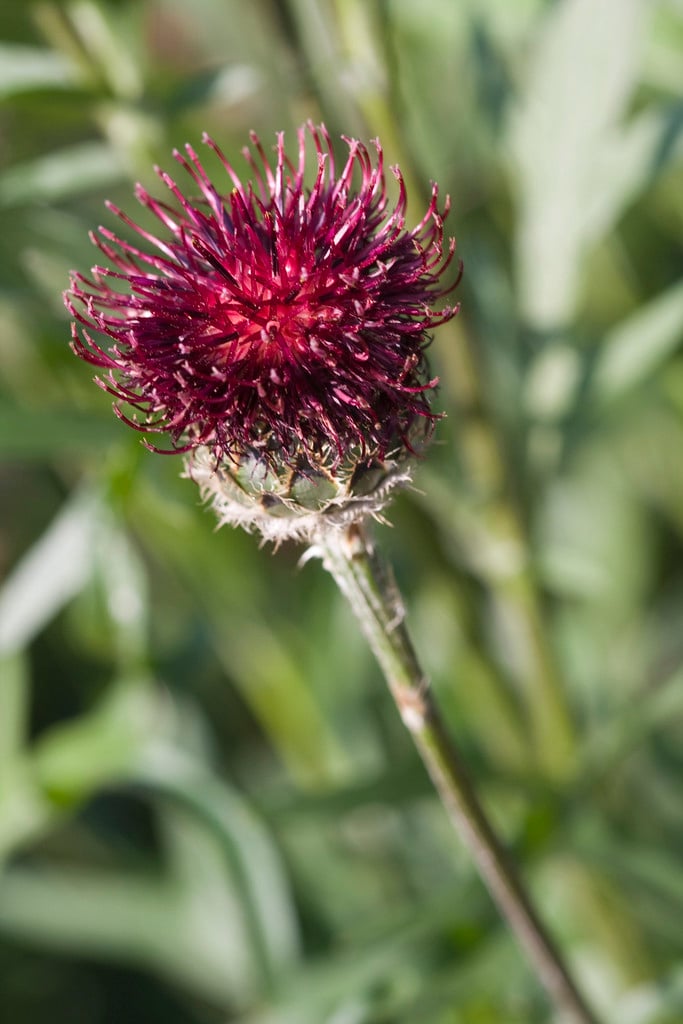
Centaurea calocephala

RHS Plant Profile
very dark purple knapweed
very dark purple knapweed RHS

Synonyms

Cheirolophus benoistii misapplied
Centaurea atropurpurea
Centaurea benoistii misapplied

Plants for pollinators
Herbaceous Perennial

A clump-forming perennial to 1m with deeply divided, grey-green leaves. The deep red flowers emerge from bronze-coloured, scaly buds on strong stems in summer

Position

Full sun

Soil Types

Chalk, Loam, Sand

Max Height

0.5-1 metres

Max Spread

0.1-0.5 metres

Size

Time to Maturity
2–5 years
Max Spread
0.1-0.5 metres
Max Height
0.5-1 metres

Growing Conditions

Chalk Loam Sand
Moisture
Well–drained
pH
Acid or Alkaline or Neutral

Position

Full sun
Aspect
West–facing or South–facing
Exposure
Exposed or Sheltered
Hardiness
H7

Colour & Scent

Season Stem Flower Foliage Fruit
Spring
Summer
Autumn
Winter

Botanical Details

Family
Asteraceae
Native to GB/Ireland
No
Foliage
Deciduous
Habit
Clump forming
Genus
Centaurea may be annuals, perennials or subshrubs, with simple or pinnately lobed leaves and showy thistle-like flowers-heads, often with enlarged outer florets
Name Status
Correct
Plant Range
C Balk., Romania

How to Grow

Cultivation

Any well-drained soil in full sun; good drought resistance. A fairly dry, poor soil is best as plants can be invasive if soil is rich and moist

Propagation

Propagate by seed sown in pots in a cold frame in spring or propagate by division in spring or autumn

Suggested planting locations and garden types

  • Cottage and informal garden
  • Rock garden
  • Patio and container plants
  • Wildflower meadow
  • Wildlife gardens
  • Flower borders and beds

Pruning

Deadhead regularly to prolong flowering

Pests

Generally pest-free

Diseases

May be susceptible to powdery mildews