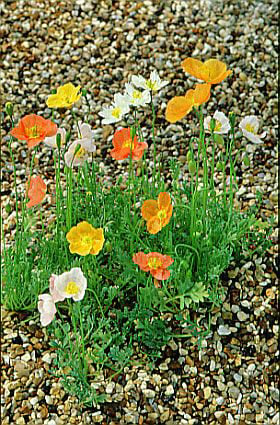
Oreomecon alpina

RHS Plant Profile
alpine poppy
alpine poppy Dorling Kindersley 2003

Other common names

alpine parsley

Synonyms

Papaver aurantiacum
Papaver alpinum subsp. ernesti-mayeri
Papaver julicum
Papaver burseri
Papaver kerneri
Papaver rhaeticum
Papaver degenii
Papaver sendtneri
Papaver pyrenaicum subsp. degenii
Papaver lapponicum subsp. occidentale
Papaver alpinum

Plants for pollinators
Alpine Rockery Herbaceous Perennial

A short-lived perennial to 20cm in height, forming a tuft of pinnately divided leaves, with solitary cup-shaped yellow, orange, red or white flowers to 4cm across in summer

Position

Full sun

Soil Types

Chalk, Loam, Sand

Max Height

0.1-0.5 metres

Max Spread

0-0.1 metre

Size

Time to Maturity
2–5 years
Max Spread
0-0.1 metre
Max Height
0.1-0.5 metres

Growing Conditions

Chalk Loam Sand
Moisture
Well–drained
pH
Acid or Alkaline or Neutral

Position

Full sun
Aspect
South–facing or West–facing
Exposure
Exposed or Sheltered
Hardiness
H6

Colour & Scent

Season Stem Flower Foliage Fruit
Spring
Summer
Autumn
Winter

Botanical Details

Family
Papaveraceae
Native to GB/Ireland
No
Foliage
Deciduous
Habit
Tufted
Genus
A relatively new genus of perennial alpine poppy with long, hairy, leafless stems and solitary red, white, yellow or orange flowers
Name Status
Correct
Plant Range
Mountains of Europe

How to Grow

Cultivation

Grow in well-drained, deep, fertile soil in full sun

Propagation

Propagate by seed or division

Suggested planting locations and garden types

  • Gravel garden
  • Rock garden
  • Cottage and informal garden
  • Garden edging

Pruning

No pruning required

Pests

May be susceptible to aphids

Diseases

May be susceptible to downy mildews, powdery mildews, fungal wilts and verticillium wilt