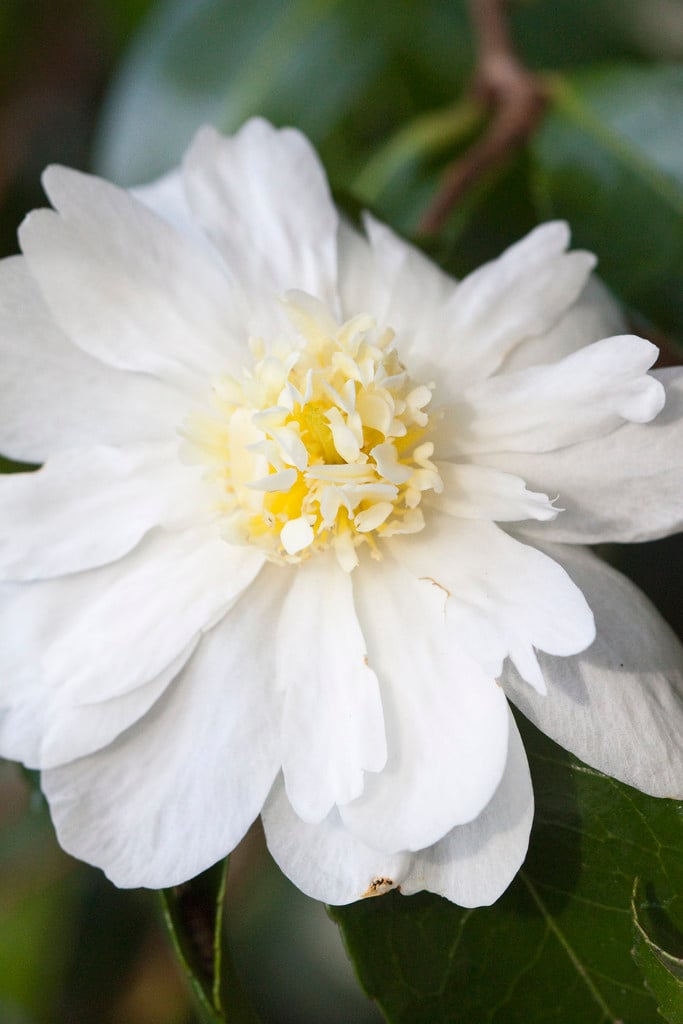
Camellia 'Winter's Snowman'

RHS Plant Profile
camellia 'Winter's Snowman'
camellia 'Winter's Snowman' RHS

Synonyms

Camellia sasanqua 'Winter's Snowman'

Award of Garden Merit
Shrubs

A large, evergreen shrub with small, glossy, dark green leaves; the young leaves are bronze-red. Fragrant, white semi-double flowers appear from late autumn to early winter

Position

Full shade, Full sun, Partial shade

Soil Types

Clay, Loam, Sand

Max Height

1.5-2.5 metres

Max Spread

1.5-2.5 metres

Size

Time to Maturity
5–10 years
Max Spread
1.5-2.5 metres
Max Height
1.5-2.5 metres

Growing Conditions

Clay Loam Sand
Moisture
Moist but well–drained or Well–drained
pH
Acid or Neutral

Position

Full shade Full sun Partial shade
Aspect
East–facing or North–facing or West–facing
Exposure
Sheltered
Hardiness
H5

Colour & Scent

Fragrance Flower
Season Stem Flower Foliage Fruit
Spring
Summer
Autumn
Winter

Botanical Details

Family
Theaceae
Native to GB/Ireland
No
Foliage
Evergreen
Habit
Bushy
Genus
Camellia are evergreen shrubs with simple, ovate, glossy, leathery leaves and showy flowers with solitary or clustered flowers early in the year
Name Status
Accepted

How to Grow

Cultivation

Suitable for woodland and acidic soils. Position in a site sheltered from cold, dry winds and early morning sun as buds and flowers may be damaged by cold winds and late frosts see camellia cultivation

Propagation

Propagate by leaf bud or semi-hardwood cuttings; propagate by grafting in late winter

Suggested planting locations and garden types

  • City and courtyard gardens
  • Cottage and informal garden
  • Coastal
  • Flower borders and beds

Pruning

Pruning group 8

Pests

May be susceptible to camellia gall, aphids, cushion scale and vine weevil

Diseases

May be susceptible to honey fungus, phytophthora root rot, camellia gall, camellia leaf blight, camellia yellow mottle virus and flowers may be infected by camellia petal blightMay be susceptible to honey fungus, phytophthora root rot, camellia gall, camellia leaf blight and camellia yellow mottle virus