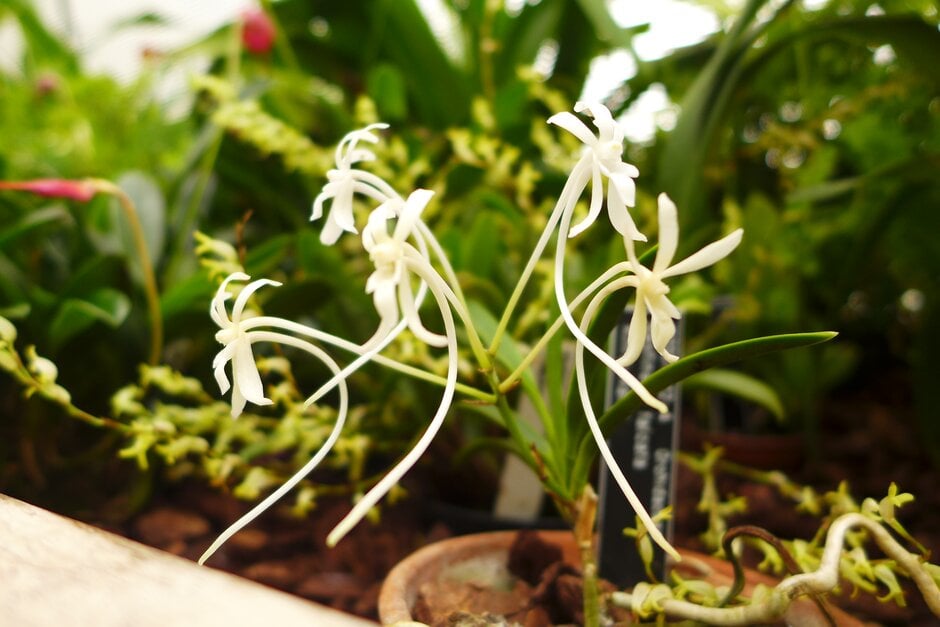
 Valeria Valkova
 Synonyms
Angraecum falcatum, Neofinetia falcata
Conservatory Greenhouse Houseplants
Position
Partial shade
Max Height
0.1-0.5 metres
Max Spread
0.1-0.5 metres
Valeria Valkova Angraecum falcatum, Neofinetia falcata
0.1-0.5 metres
0.1-0.5 metres
Grow in a sustainably sourced orchid bark or moss. Highly absorbent, sponge-like roots are the main water-storage organs. Dark green or purplish tips of the roots may be observed as a sign of actively growing plant. High air humidity (at least 80%), good air circulation and regular misiting is needed in summer. Reduce misting to avoid rots in winter, but don't leave plants dry for prolonged periods. Where possible, use rain water or other soft, but not softened water. See also
Propagation by seed is only possible in a controlled laboratory environment. Mature plants produce sideshoots which may be removed and potted separately, when the new roots (ideally three or more) are at least 1cm long.
No pruning required, cut off the short flowering stem once the flowers faded
May be susceptible to scale insect and mealybugs. thrips can cause damage on flowers and developing flower buds.
Generally disease-free. Poor air movement may cause bacterial of fungal rots. Good hygiene practice and sterilising cutting tools prevent the spread of virus diseases.