Monarda bradburyana
Bradbury's bergamot
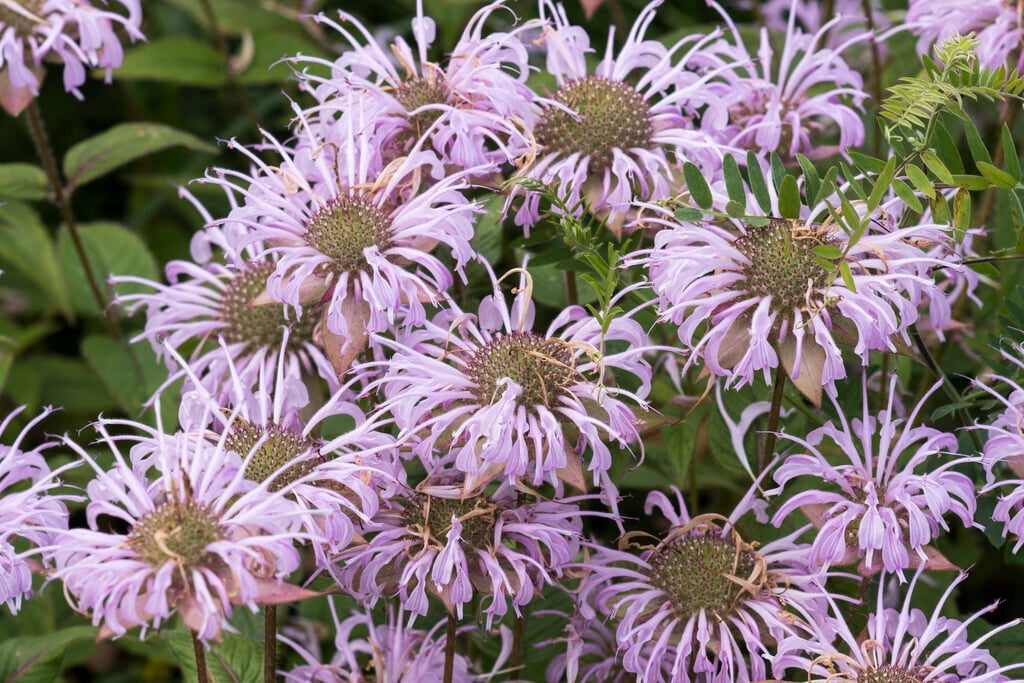
A clump-forming perennial from 30cm to 60cm tall, with dull greyish-green, aromatic, lance-shaped leaves in widely spaced pairs. Whorls of pale pink to white, two-lipped, tubular flowers with small, purple spots appear in the summer
Size
Ultimate height
0.5–1 metresTime to ultimate height
2–5 yearsUltimate spread
0.1–0.5 metresGrowing conditions
Moisture
Moist but well–drained, Well–drainedpH
Acid, Alkaline, NeutralColour & scent
| Stem | Flower | Foliage | Fruit | |
| Spring | Green | |||
|---|---|---|---|---|
| Summer | Pink White | Green | ||
| Autumn | Green | |||
| Winter |
Position
- Full sun
Aspect
East–facing or South–facing or West–facing
Exposure
Exposed or Sheltered Hardiness
H5Botanical details
- Family
- Lamiaceae
- Native to GB / Ireland
- No
- Foliage
- Deciduous
- Habit
- Clump forming
- Genus
Monarda can be annuals or clump-forming herbaceous perennials with aromatic, ovate leaves and terminal whorls of 2-lipped, tubular flowers from summer to early autumn
- Name status
Correct
- Plant range
- Central and E USA
How to grow
Cultivation
Grow in well-drained soil in full sun or partial shade. More tolerant of poor, dry soil than most monardas, but protect from excessive winter wet . Lift and divide every three years
Propagation
Propagate by division in early spring, before new growth begins, or by basal softwood cuttings
Suggested planting locations and garden types
- Cottage and informal garden
- Wildlife gardens
- Prairie planting
Pruning
Deadheading regularly should encourage more flowers. Cut stems down to the ground in autumn, or leave seed heads for winter structure
Pests
May be susceptible to slugs, especially in spring
Diseases
Generally disease-free
Get involved
The Royal Horticultural Society is the UK’s leading gardening charity. We aim to enrich everyone’s life through plants, and make the UK a greener and more beautiful place.