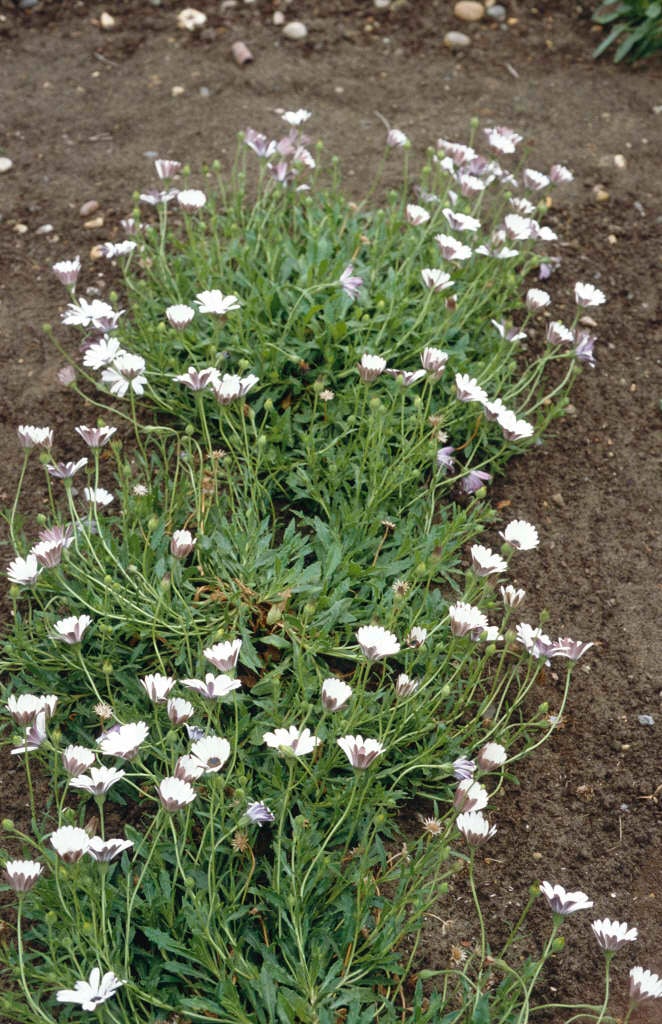
Dimorphotheca 'White Pim'

RHS Plant Profile
African daisy 'White Pim'
African daisy 'White Pim' RHS 1993

Synonyms

Osteospermum 'White Pim'
Osteospermum 'Prostratum'
Dimorphotheca ecklonis 'Prostrata'
Osteospermum 'Cornish Carpet'
Osteospermum ecklonis var. prostratum
Osteospermum caulescens misapplied
Dimorphotheca caulescens misapplied

Award of Garden Merit
Herbaceous Perennial

A prostrate evergreen subshrub forming a mat to 20cm in height, with oblanceolate leaves 6-8cm in length, and solitary daisy-like flowerheads 6cm in width, the rays florets white, tinged purple beneath

Position

Full sun

Soil Types

Chalk, Loam, Sand

Max Height

0.1-0.5 metres

Max Spread

0.1-0.5 metres

Size

Time to Maturity
2–5 years
Max Spread
0.1-0.5 metres
Max Height
0.1-0.5 metres

Growing Conditions

Chalk Loam Sand
Moisture
Well–drained
pH
Acid or Alkaline or Neutral

Position

Full sun
Aspect
South–facing or East–facing
Exposure
Exposed or Sheltered
Hardiness
H3

Colour & Scent

Season Stem Flower Foliage Fruit
Spring
Summer
Autumn
Winter

Botanical Details

Family
Asteraceae
Native to GB/Ireland
No
Foliage
Evergreen
Habit
Bushy
Potentially harmful
Pets (rabbits, rodents): Harmful if eaten. For further information and contact numbers regarding pets, see the HTA guide to potentially harmful plants
Genus
Dimorhotheca can be annuals or woody-based, evergreen perennials with simple, alternate leaves and large daisy-like flower-heads in summer and autumn
Name Status
Accepted

How to Grow

Cultivation

Grow in light, moderately fertile, well-drained soil in a warm, sunny position. In frosty areas overwinter cuttings under glass

Propagation

Propagate by softwood cuttings in late spring or semi-hardwood cuttings in late summer

Suggested planting locations and garden types

  • City and courtyard gardens
  • Coastal
  • Gravel garden
  • Cottage and informal garden
  • Patio and container plants
  • Mediterranean climate plants
  • Flower borders and beds

Pruning

No pruning required

Pests

May be susceptible to aphids

Diseases

May be susceptible to downy mildews and Verticillium wilt