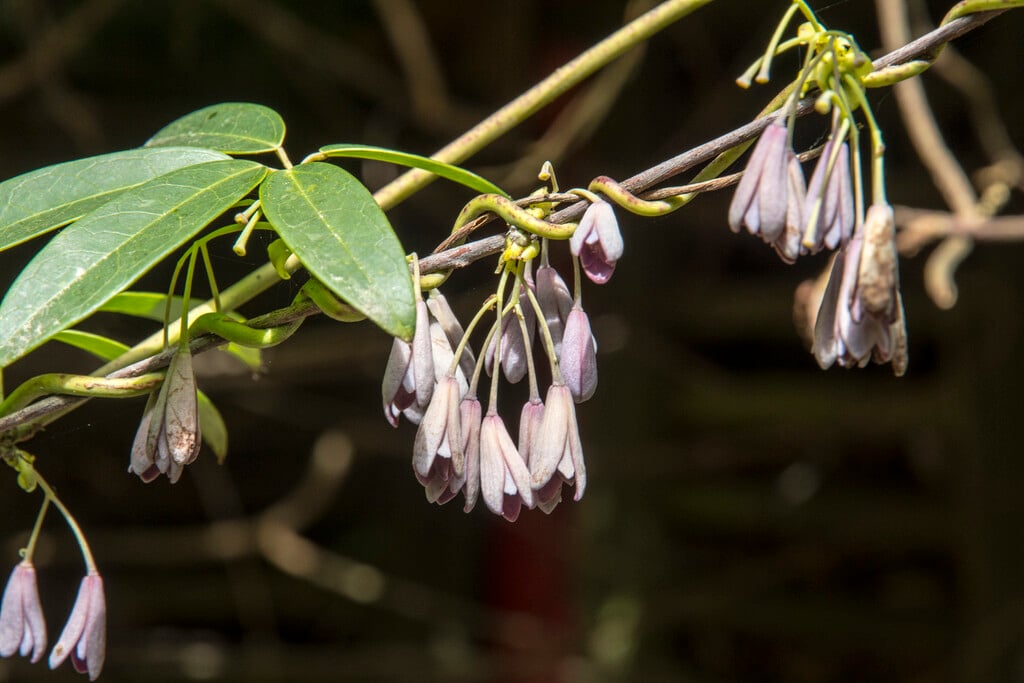
Stauntonia angustifolia subsp. angustifolia

RHS Plant Profile
narrow-leaf sausage vine
narrow-leaf sausage vine visionspictures.com

Other common names

narrow-leaf holboellia

Synonyms

Holboellia angustifolia subsp. angustifolia, Holboellia fargesii, Holboellia latifolia var. angustifolia

Climber Wall Shrub

Vigorous, evergreen, twining climber about 7m tall, with glossy green palmate leaves composed of about 6 leaflets to 13 cm long. Short flower racemes with small greenish-white male flowers and larger but fewer purplish female flowers in spring, may be followed by edible, sausage-shaped purple fruits to 9cm long

Position

Full sun, Partial shade

Soil Types

Chalk, Loam, Sand

Max Height

4-8 metres

Max Spread

2.5-4 metres

Size

Time to Maturity
5–10 years
Max Spread
2.5-4 metres
Max Height
4-8 metres

Growing Conditions

Chalk Loam Sand
Moisture
Well–drained
pH
Acid or Alkaline or Neutral

Position

Full sun Partial shade
Aspect
South–facing or West–facing or East–facing
Exposure
Sheltered
Hardiness
H3

Colour & Scent

Season Stem Flower Foliage Fruit
Spring
Summer
Autumn
Winter

Botanical Details

Family
Lardizabalaceae
Native to GB/Ireland
No
Foliage
Evergreen
Habit
Climbing
Genus
Stauntonia are evergreen twining climbers with palmate leaves and small, bell-shaped flowers, male and female usually in separate axillary racemes on the same plant, followed by edible fruits
Name Status
Correct

How to Grow

Cultivation

Grow in moderately fertile, humus-rich, well-drained soil in sun or part shade with shelter from cold winds

Propagation

Propagate by seed in containers in a cold frame in spring, or by semi-ripe cuttings in late summer or autumn, or by layering in autumn

Suggested planting locations and garden types

  • City and courtyard gardens
  • Cottage and informal garden
  • Climber and wall shrubs
  • Conservatory and greenhouse
  • Wall side borders
  • Edible fruit

Pruning

pruning group 11 in spring

Pests

Generally pest-free

Diseases

Generally disease-free