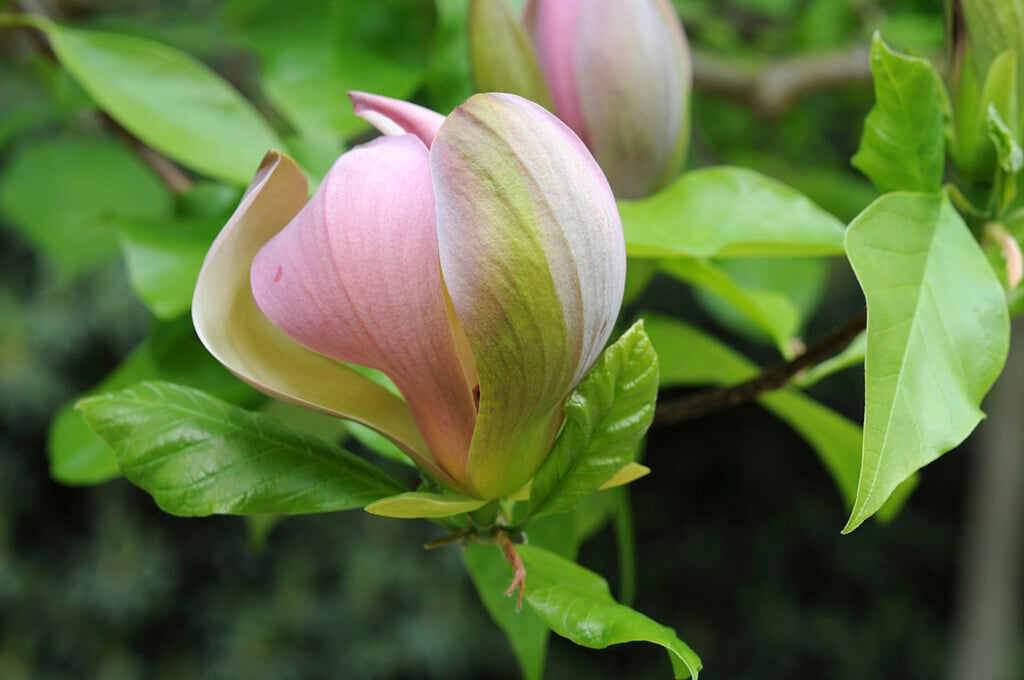
Magnolia × brooklynensis 'Woodsman'

RHS Plant Profile
magnolia 'Woodsman'
magnolia 'Woodsman' visionspictures.com

Synonyms

Magnolia 'Woodsman'

Trees

A mid-sized deciduous tree, to around 4m high in 10 years, and up to 10m high at maturity. It has an upright then spreading habit, and broadly oval, glossy green leaves. Large, cup-shaped flowers appear with the leaves in spring, and are dusky lilac-pink brushed with green on the outside, and creamy white on the inside with pink veins

Position

Full sun, Partial shade

Soil Types

Clay, Loam, Sand

Max Height

8-12 metres

Max Spread

4-8 metres

Size

Time to Maturity
20–50 years
Max Spread
4-8 metres
Max Height
8-12 metres

Growing Conditions

Clay Loam Sand
Moisture
Moist but well–drained
pH
Acid or Neutral

Position

Full sun Partial shade
Aspect
South–facing or West–facing
Exposure
Sheltered
Hardiness
H5

Colour & Scent

Season Stem Flower Foliage Fruit
Spring
Summer
Autumn
Winter

Botanical Details

Family
Magnoliaceae
Native to GB/Ireland
No
Foliage
Deciduous
Habit
Columnar upright, Spreading branched
Genus
Magnolia can be deciduous or evergreen trees or shrubs, with large, showy, often fragrant flowers, often opening before the leaves, and sometimes followed by colourful cone-like fruit
Name Status
Accepted

How to Grow

Cultivation

Grow in moist but well-drained, neutral to acid soil in full sun or part shade with shelter from cold winds. Late frosts may damage flower buds. See magnolia cultivation for more advice

Propagation

Propagate by softwood cuttings in early summer or by semi-ripe cuttings in late summer

Suggested planting locations and garden types

  • Architectural

Pruning

Minimal pruning required, see pruning group 1. Deciduous magnolias should only be pruned between midsummer and early autumn

Pests

May be susceptible to scale insects, horse chestnut scale and capsid bug

Diseases

May be susceptible to coral spot, phytophthora, grey moulds, honey fungus, a virus or fungal leaf spot