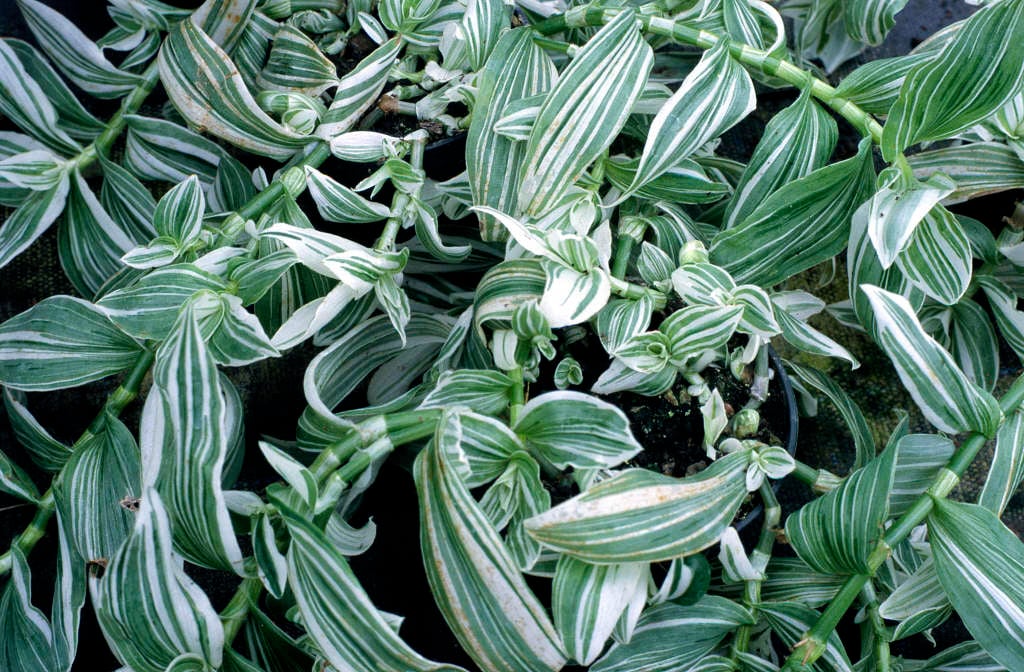
Tradescantia fluminensis 'Quicksilver' (v)

RHS Plant Profile
spiderwort 'Quicksilver'
spiderwort 'Quicksilver' RHS 2002

Synonyms

Tradescantia 'Quicksilver'

Award of Garden Merit
Bedding Houseplants

'Quicksilver' is an evergreen perennial to 20cm, with elliptic to ovate leaves longitudinally striped with white, and terminal clusters of small white flowers intermittently throughout the year

Position

Full sun, Partial shade

Soil Types

Loam, Sand

Max Height

0.1-0.5 metres

Max Spread

0.1-0.5 metres

Size

Time to Maturity
2–5 years
Max Spread
0.1-0.5 metres
Max Height
0.1-0.5 metres

Growing Conditions

Loam Sand
Moisture
Moist but well–drained
pH
Acid or Alkaline or Neutral

Position

Full sun Partial shade
Aspect
East–facing or South–facing or West–facing
Exposure
Sheltered
Hardiness
H1C

Colour & Scent

Season Stem Flower Foliage Fruit
Spring
Summer
Autumn
Winter

Botanical Details

Family
Commelinaceae
Native to GB/Ireland
No
Foliage
Evergreen
Habit
Trailing
Potentially harmful
Skin allergen. Wear gloves and other protective equipment when handling
Genus
Tradescantia can be trailing or tufted perennials with usually fleshy, evergreen foliage and distinctive, 3-petalled flowers
Name Status
Unresolved

How to Grow

Cultivation

Under glass grow in peat-free, loam-based potting compost in bright filtered light; water moderately when in active growth using a balanced liquid fertiliser monthly, water sparingly in winter. Outdoors, grow in moist, fertile soil in sun or shade. Water freely in dry weather

Propagation

Propagate by softwood cuttings using stem tips in spring or summer, rooting in peat-free cutting compost or water, then pot up into peat-free, loam-based potting compost

Suggested planting locations and garden types

  • Patio and container plants
  • Low Maintenance

Pruning

Pinch growing tips to encourage bushiness and remove plain green foliage

Pests

May be susceptible to red spider mite, mealybugs, aphids, vine weevil and thrips

Diseases

Generally disease-free