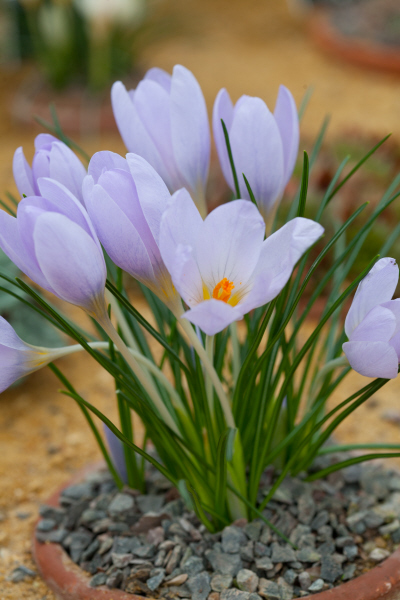
Crocus serotinus subsp. salzmannii

<em>Crocus</em> <em>serotinus</em> subsp. <em>salzmannii</em> Dorling Kindersley Ltd

Synonyms

Crocus salzmannii
Crocus asturicus

Plants for pollinators
Bulbs Conservatory Greenhouse

An autumn-flowering corm. Funnel-shaped, lilac blue flowers, to 10cm in height, sometimes with a yellow throat, appear with the narrow, linear leaves

Position

Full sun

Soil Types

Loam, Sand

Max Height

Up to 10 cm

Max Spread

0-0.1 metre

Size

Time to Maturity
2–5 years
Max Spread
0-0.1 metre
Max Height
Up to 10 cm

Growing Conditions

Loam Sand
Moisture
Well–drained
pH
Neutral

Position

Full sun
Aspect
South–facing or East–facing or West–facing
Exposure
Sheltered
Hardiness
H6

Colour & Scent

Season Stem Flower Foliage Fruit
Spring
Summer
Autumn
Winter

Botanical Details

Family
Iridaceae
Native to GB/Ireland
No
Foliage
Deciduous
Habit
Columnar upright
Potentially harmful
Ornamental bulbs - not to be eaten. Wear gloves and other protective equipment when handling. Pets: Ornamental bulbs - not to be eaten - see the HTA guide to potentially harmful plants for further information and useful contact numbers
Genus
Crocus are dwarf, deciduous perennials growing from a corm, with linear leaves usually with a silvery central stripe, and goblet-shaped, sometimes fragrant flowers in autumn or early spring
Name Status
Correct
Plant Range
Iberian Peninsula, Morocco

How to Grow

Cultivation

Prefers sun and well-drained compost. Keep warm and dry in dormant season. See crocus cultivation for more advice

Propagation

Propagate by seed or division of clumps

Suggested planting locations and garden types

  • Patio and container plants
  • Rock garden
  • Mediterranean climate plants
  • Wildlife gardens

Pruning

No pruning required

Pests

May be susceptible to rodents and birds

Diseases

Generally disease-free, corms may rot in storage