 RHS
RHS Fruit Edible Shrubs Trees
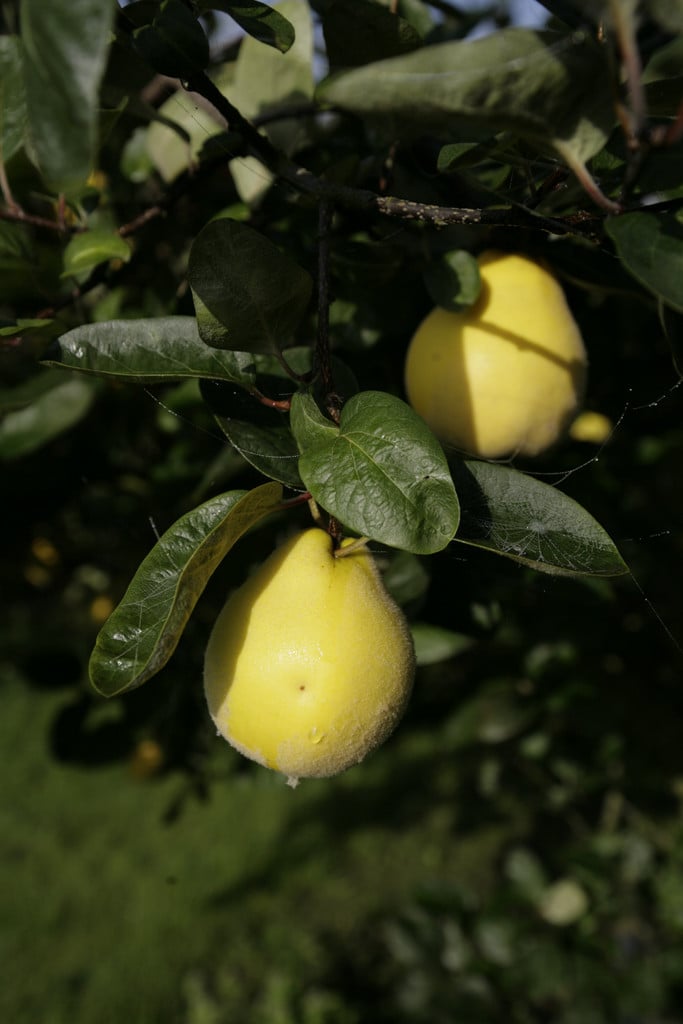
Produces regular crops of pear-shaped fruit with good flavour
Position
Full sun
Soil Types
Clay, Loam
Max Height
2.5-4 metres
Max Spread
2.5-4 metres
RHS Produces regular crops of pear-shaped fruit with good flavour
2.5-4 metres
2.5-4 metres
| Season | Stem | Flower | Foliage | Fruit |
|---|---|---|---|---|
| Spring | ||||
| Summer | ||||
| Autumn | ||||
| Winter |
Grow in a warm, sheltered spot as flowers are susceptible to frost and warm conditions are needed for the fruit to ripen well. Tolerant to a wide range of soil, but will do best where soil is deep and moisture retentive, so long as it is not prone to waterlogging. Further quince cultivation advice
Propagate from semi-ripe cuttings in summer, but it is often propagated by grafting onto a clonal rootstock for fruit. The rootstock will determine the size of the plant. It can be established on its own root
Generally pest-free but may be susceptible to pests that can affect apples and pears such as caterpillars and aphids
May be susceptible to quince leaf blight, brown rot, fireblight, Powdery mildews and honey fungus